What a hair restoration clinic offers: your UK guide
UK hair restoration clinics offer far more than surgery. A reputable clinic provides a full care pathway: from detailed diagnosis through to medical management, regenerative therapies, and surgical procedures, all tailored to your specific cause of hair loss. Here is what you can expect across the full range of services:
- Medical consultation and diagnosis
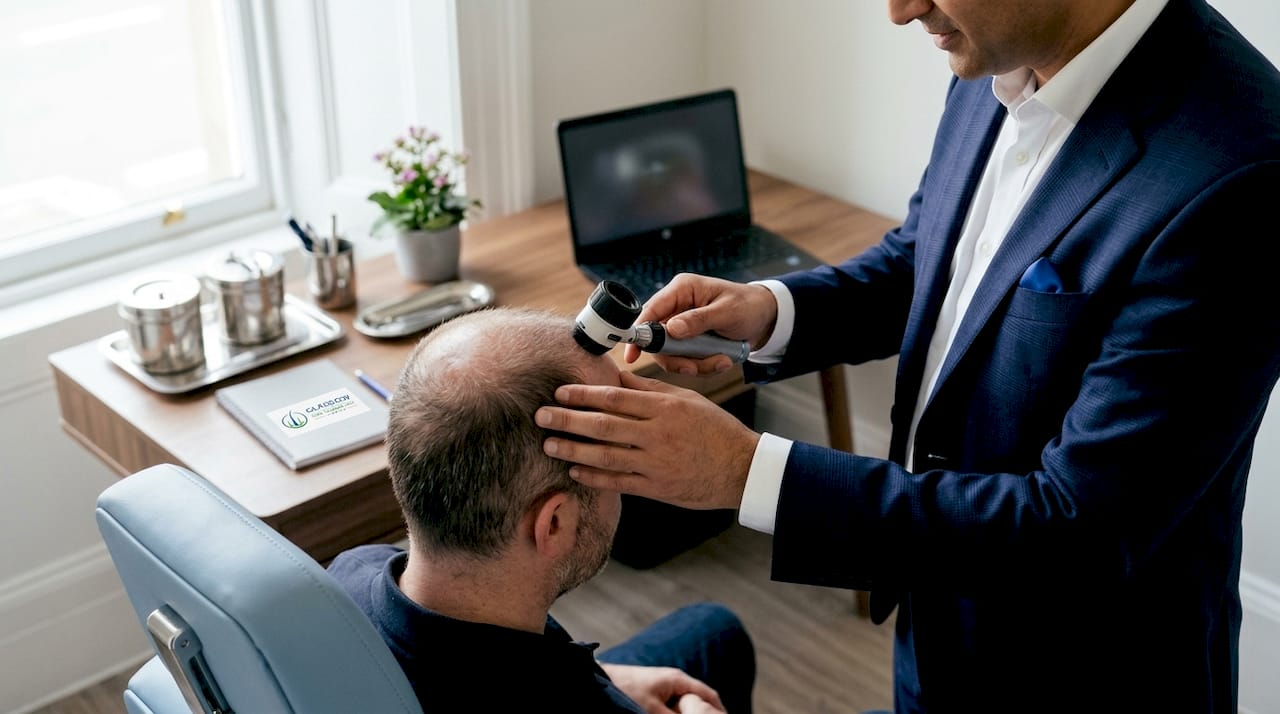
using trichoscopy (scalp microscopy) and blood tests to identify the root cause of hair loss before any treatment is recommended
- Prescription medications
including oral finasteride, topical and oral minoxidil, and spironolactone for female pattern hair loss, all supervised by a qualified clinician
- Regenerative treatments
such as Platelet-Rich Plasma (PRP) injections, Platelet-Rich Fibrin (PRF) therapy, polynucleotide therapy, and low-level red-light laser therapy
- Surgical procedures
including Follicular Unit Extraction (FUE) and Follicular Unit Transplant (FUT), performed by GMC-registered surgeons at CQC-registered clinics
- Specialised restoration
for beard, eyebrow, and hairline areas, not just scalp coverage
- Pre-treatment assessments
covering medical history review, donor hair evaluation, and scalp condition analysis
- Post-treatment aftercare
including follow-up appointments, medication guidance, and recovery support
- Surgery is treated as a last resort within a multi-modality plan, not the automatic first recommendation
What hair restoration treatment options does a clinic provide?
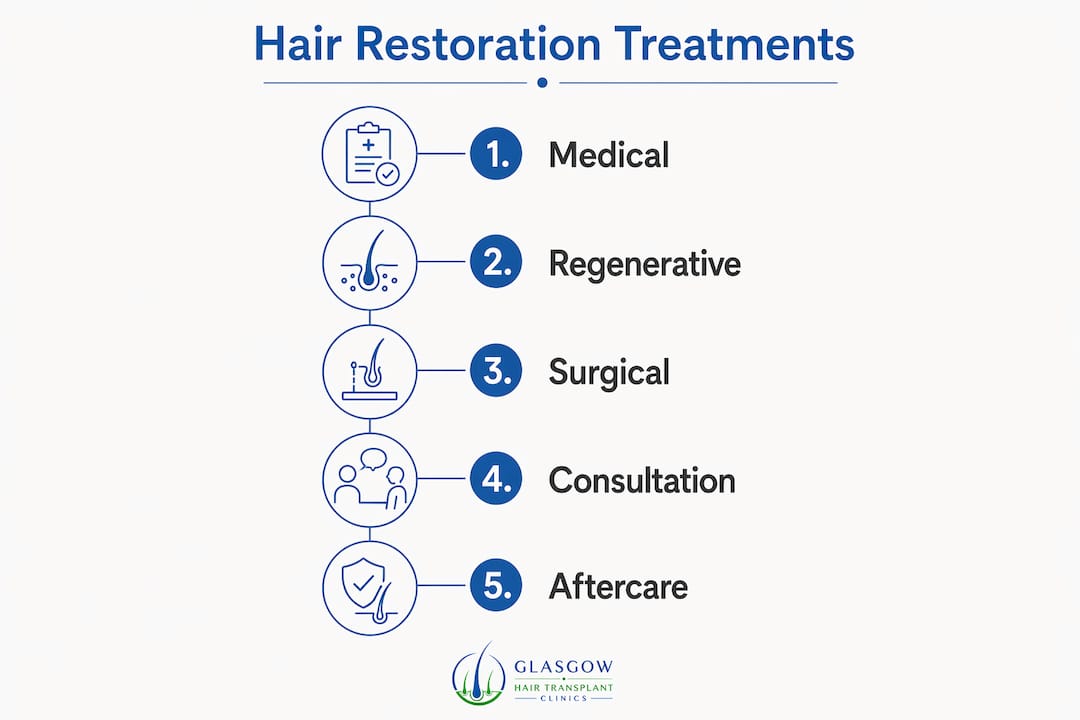
Reputable UK clinics organise their treatments into three broad categories: medical, regenerative, and surgical. Understanding each helps you have a more informed conversation with your clinician and set realistic expectations from the outset.
Medical treatments
Prescription medications
form the foundation of most hair loss management plans. Oral finasteride works by blocking the hormone DHT, which drives male pattern baldness. Topical and oral minoxidil stimulate follicle activity and are used in both men and women. Spironolactone is prescribed specifically for female pattern hair loss, where hormonal factors are often central to the condition. All three require medical supervision and are tailored to the individual’s diagnosis rather than applied as a blanket solution.
Pros and cons of medical treatments:
- Pro:
Non-invasive, relatively low cost, and can slow or halt progression effectively
- Pro:
Can be combined with other therapies to enhance results
- Con:
Require long-term, consistent use to maintain benefit
- Con:
Results vary depending on the stage and cause of hair loss
Regenerative treatments
PRP therapy
involves drawing a small amount of the patient’s blood, concentrating the platelets, and injecting the resulting plasma into the scalp to stimulate follicle activity. Clinical evidence suggests PRP can improve hair density by 30–40%, while low-level red-light therapy shows a 20–25% density increase after 26 weeks of consistent treatment. PRF (Platelet-Rich Fibrin) is a more concentrated evolution of PRP, releasing growth factors over a longer period. Polynucleotide therapy, derived from purified DNA fragments, is a newer addition to the regenerative toolkit and is gaining traction in UK clinics.
Pros and cons of regenerative treatments:
- Pro:
Minimally invasive with no surgical downtime
- Pro:
Can complement both medical and surgical approaches
- Con:
Multiple sessions are typically required to achieve and maintain results
- Con:
Not suitable as a standalone solution for advanced hair loss
Surgical treatments
FUE and FUT are the two principal surgical techniques. FUE extracts individual follicular units from the donor area, leaving no linear scar, which suits patients who prefer shorter hairstyles. FUT removes a strip of scalp from the donor region, allowing a larger number of grafts to be harvested in a single session, though it leaves a linear scar. The choice between them depends on the patient’s goals, donor hair availability, and the surgeon’s assessment. Both techniques are used for scalp, beard, and eyebrow restoration at specialist clinics including Glasgowhairtransplantclinics.
Pros and cons of surgical treatments:
- Pro:
Permanent results with natural-looking hair growth
- Pro:
Addresses areas where non-surgical options have limited effect
- Con:
Requires recovery time and careful post-operative management
- Con:
Donor hair supply is finite, so realistic planning is essential
What happens during a hair restoration consultation?
The consultation is where a credible clinic earns your trust. A thorough diagnostic assessment is the foundation of any responsible treatment plan, and diagnosis must precede any surgery recommendation. Rushing to a surgical recommendation without understanding the cause of hair loss is a red flag.
A standard consultation at a reputable UK clinic typically includes:
- Trichoscopy (scalp microscopy):
A non-invasive examination of the scalp and follicles, revealing miniaturisation patterns, follicle density, and scalp health
- Blood tests:
Screening for thyroid function, iron levels, vitamin D, and hormonal markers that can drive or worsen hair loss
- Medical history review:
A detailed discussion of family history, previous treatments, medications, and any underlying health conditions. This is what is meant by a hair transplant medical history review, and it directly shapes the treatment plan
- Donor area assessment:
Evaluating the quality and density of hair in the donor zone to determine surgical feasibility
- Treatment options discussion:
A transparent walkthrough of all suitable options, including non-surgical routes, with honest communication about expected outcomes
Clinics should be staffed by medically qualified doctors rather than relying solely on trichologists, who are not always medically trained. The role of consultation
in shaping a safe, personalised treatment plan cannot be overstated. Patients who prepare thoroughly
for this appointment, bringing a list of current medications and a clear account of their hair loss timeline, get significantly more from the session.
Who is a suitable candidate for hair restoration?
Not everyone experiencing hair loss is immediately suitable for surgical intervention, and a responsible clinic will tell you so. Candidacy depends on several clinical and personal factors that vary considerably between patients.
For surgical procedures (FUE or FUT), clinics typically look for:
- Stable hair loss, meaning the pattern has not changed significantly over the past 12 months
- Sufficient donor hair density in the back and sides of the scalp
- Good general health with no conditions that impair wound healing
- Realistic expectations about coverage, density, and the possibility of future loss
- Age considerations: very young patients are often advised to wait until their hair loss pattern is established
For non-surgical options, suitability is broader:
- Early to moderate hair loss responds well to medical and regenerative treatments
- Patients with certain autoimmune conditions (such as alopecia areata) may not be candidates for transplantation but can benefit from targeted medical therapies
- Women experiencing diffuse thinning are often better served by medical management before surgery is considered
Men and women follow different treatment protocols. Female pattern hair loss tends to be more diffuse, which affects both the surgical approach and the suitability of donor areas. Clinics assess donor hair quality
and scalp condition carefully during evaluation, as these factors determine the realistic scope of any surgical outcome.
Contraindications and risk factors to discuss with your clinician:
- Active scalp infections or inflammatory conditions
- Blood clotting disorders or use of anticoagulant medications
- History of keloid scarring, which increases the risk of poor scar outcomes
- Uncontrolled systemic conditions such as unmanaged diabetes
- Insufficient donor hair to achieve a natural-looking result
What do hair restoration treatments cost in the UK?
Additional costs to factor into your budget include:
- Ongoing medications:
Finasteride and minoxidil are long-term commitments, typically costing between £20 and £60 per month depending on the formulation
- PRP or PRF sessions:
Usually priced per session, with packages often available. Glasgowhairtransplantclinics offers 3 PRP sessions from £495
- Follow-up appointments:
Some clinics include these in the surgical fee; others charge separately
- Supplemental treatments:
Post-operative laser therapy or additional PRP to support graft survival may be recommended
Some clinics offer financing arrangements, allowing patients to spread the cost over a set period. If you are considering this route, read the terms carefully and confirm the total repayable amount before committing.
Post-procedure recovery: what to expect
Post-surgical care
involves managing minor discomfort and scabbing in the days immediately following the procedure. Most patients return to desk-based work within a week. A phase of temporary shedding, known as shock loss, typically occurs around weeks 2–6, which can be alarming but is a normal part of the process. New growth generally becomes visible from around month 3–4, with the full result taking 12–18 months to mature.
Essential aftercare steps:
- Sleep with your head elevated for the first few nights to reduce swelling
- Avoid direct sun exposure to the treated area for at least four weeks
- Follow the prescribed washing and moisturising routine precisely
- Attend all follow-up appointments so the clinical team can monitor graft survival
- Take any prescribed medications as directed, including antibiotics and anti-inflammatories
Warning signs to watch for in clinic pricing:
- Offers significantly below the £3,000 floor are a reliable indicator of compromised standards
- Aggressive discounting or pressure to book immediately without a proper consultation
- Clinics that quote per-session prices without disclosing the total graft count or session number required
How do you choose a reputable hair restoration clinic in the UK?
The single most important step is verifying credentials before you book anything. GMC registration for surgeons and CQC registration for clinics are the baseline legal requirements in England. Scotland, Wales, and Northern Ireland have equivalent regulatory frameworks. These registrations are publicly searchable, so there is no reason to take a clinic’s word for it.
Beyond the legal minimum, look for membership of the British Association of Hair Restoration Surgery (BAHRS), which indicates a surgeon has met the specialist standards of the field. The International Society of Hair Restoration Surgery (ISHRS) is the equivalent body at a global level, and membership of either signals a commitment to ongoing professional development.
Indicators of a trustworthy clinic:
- Transparent, itemised pricing with no hidden fees
- A consultation led by the operating surgeon, not a sales consultant
- Honest communication about what is and is not achievable given your donor supply
- Patient testimonials that are verifiable, not anonymous or generic
- Clear post-operative support protocols, including who to contact if complications arise
- No pressure to commit during the consultation itself
Red flags to walk away from:
- The surgeon you meet at consultation is not the one performing the procedure
- Pricing is vague or contingent on booking the same day
- The clinic cannot provide GMC or CQC registration numbers on request
- Before-and-after photos are stock images or lack clinical detail
Pro Tip:
Ask the clinic directly: “Will the surgeon I am speaking with today be the one performing my procedure?” A reputable clinic will answer yes without hesitation. If the answer is evasive, treat it as a serious warning sign.
Glasgowhairtransplantclinics operates with GMC-registered surgeons
and CQC-registered facilities, with a patient-centred model where the consulting surgeon remains responsible for your care throughout. Transparent communication about donor hair limits and realistic outcomes is central to how the clinic operates.
What do experts and regulators say about UK hair restoration standards?
The professional consensus in UK hair restoration is clear: diagnosis comes before surgery, and surgery is a last resort within a broader treatment plan. A professional approach prioritises detailed diagnosis and transparency over pushing patients towards immediate surgical intervention. Clinics that invert this order, leading with surgery before understanding the cause of hair loss, fall short of accepted clinical standards.
The regulatory framework in the UK is built around three pillars. The General Medical Council (GMC) governs surgeon registration and professional conduct. The Care Quality Commission (CQC) registers and inspects clinics in England, setting standards for safety, staffing, and governance. BAHRS accreditation provides specialist-level credentialing for surgeons who focus specifically on hair restoration. Together, these bodies create a framework that protects patients, though the onus remains on the patient to verify each one before proceeding.
Experienced surgeons also caution against discounted transplants offered through aggressive sales tactics. The concern is not just about price; it is about the clinical culture those tactics reflect. A clinic that prioritises conversion over consultation is unlikely to prioritise your long-term outcome over its short-term revenue.
The best clinics take a multi-modality approach, combining medical management, regenerative therapies, and surgical intervention in a plan that evolves with the patient’s needs over time. This is not a single appointment and a procedure. It is an ongoing clinical relationship. Patients who understand this from the outset tend to have more realistic expectations and, as a result, greater satisfaction with their results.
Key safety and quality indicators to look for:
- Surgeon holds full GMC registration (verifiable at gmcuk.org)
- Clinic holds CQC registration (verifiable at cqc.org.uk)
- Surgeon is a full or affiliate member of BAHRS
- Consultation is conducted by the operating surgeon, not a patient coordinator
- Written treatment plan provided after consultation, with no obligation to proceed
- Clear aftercare protocol with named clinical contacts for post-operative concerns
- Honest discussion of what cannot be achieved, not just what can
Glasgowhairtransplantclinics reflects these standards across its Glasgow and UK locations, offering a full range of hair restoration treatments
within a medically supervised, patient-centred framework. For patients considering their options, reviewing before and after results
from real cases is one of the most grounding steps you can take before booking a consultation.
Ready to understand what treatment is right for you? Glasgowhairtransplantclinics offers free online and face-to-face consultations at its CQC-registered clinics across the UK. View natural results
from real patients, or explore the full cost breakdown
to plan your next step with confidence.
Key takeaways
UK hair restoration clinics offer a structured, diagnosis-led pathway covering medical, regenerative, and surgical treatments, with surgery reserved as a last resort after thorough assessment.
| Point |
Details |
| Diagnosis before treatment |
Every reputable clinic begins with trichoscopy, blood tests, and a medical history review before recommending any treatment. |
| Treatment range is broad |
Options span prescription medications, PRP and PRF therapy, red-light laser therapy, FUE, and FUT surgery. |
| Costs vary significantly |
Hair transplants in the UK typically cost between £3,000 and £7,000; offers below this range are a warning sign. |
| Credentials are verifiable |
Check GMC registration, CQC registration, and BAHRS membership before committing to any clinic or surgeon. |
| Recovery takes time |
Full surgical results generally take several months to mature; temporary shedding a few weeks after surgery is a normal part of the process. |
Recommended
Assessment comes before a treatment menu
A hair-restoration enquiry should begin with the problem you want assessed, rather than an assumption that you need surgery. A clinical consultation reviews the pattern of loss, its duration, scalp symptoms, health history and previous treatments. The findings determine whether observation, medical treatment, specialist referral or surgical planning is appropriate.
Ask who will carry out the assessment and whether an initial remote review needs an examination in person. Tests should answer a clinical question; a large blood panel is not automatically required for every patient. Bring a medicines list and photographs showing the change over time.
Medical and nonsurgical options
For suitable pattern hair loss, a prescriber may discuss medicines such as topical minoxidil or finasteride. The choice depends on the diagnosis and individual health factors. Possible side effects, pregnancy precautions where relevant, the current Danish product information and the need for ongoing treatment should be explained. The medication guide
can help you prepare questions.
Additional approaches such as PRP or light devices have a different evidence base and should not be sold with guaranteed density percentages. Ask about the exact treatment, expected review point, risks and cost of repeated sessions. Cosmetic options such as hairpieces or camouflage can also be considered, including the choice to monitor without treatment.
Surgical planning for selected patients
Hair transplantation redistributes donor follicles to selected areas. FUE
and FUT
describe different methods of obtaining grafts; both involve wounds and scars. An implantation label such as DHI does not remove the need to assess donor quality, future thinning and surgical risk.
A consultation should explain the proposed areas, realistic coverage, donor limits and alternatives. Transplantation does not prevent surrounding natural hair from thinning. The NHS procedure overview
gives general background on techniques and risks.
Beard, eyebrow and other restoration enquiries
Facial-hair restoration requires its own assessment of the cause of sparse hair, skin condition, donor characteristics and direction of growth. A patch of new beard or eyebrow loss should be medically assessed before a cosmetic procedure is planned.
The site includes information about beard transplantation, eyebrow transplantation
and hairline restoration. A guide explains a procedure; confirm availability, suitability, the treating clinician and the actual treatment location for your proposed care.
What should be clear before booking?
- The diagnosis and reason for the recommendation.
- The clinician responsible and who performs each part of treatment.
- The proposed location and relevant professional authorization.
- The expected benefit, material risks and limits.
- The follow-up schedule and contact route for complications.
- The written price, exclusions and booking terms.
Use the Danish Patient Safety Authority register
when checking Danish authorization. UK GMC registration does not establish authorization to provide care in Denmark.
Costs and aftercare
Denmark Hair Transplant Clinics provides individual written quotations in Danish kroner. Ask whether consultations, medicines, follow-up and any additional sessions are included. Confirm deposits, cancellations and payment terms in writing; no particular finance offer is established by this guide.
Recovery instructions should come from the treating team and take account of the actual procedure and your health. Ask about work, exercise, washing, travel and what symptoms require urgent advice. Patients travelling from Sweden or Norway should confirm how follow-up and unexpected problems will be handled after returning home.
Contact the Denmark team
The Copenhagen consultation address is Frederiksborggade 15, 1358 København, Denmark. Email enquiries@hairtransplantdenmark.dk
or use the temporary UK contact number +44 7802 487303
to discuss arrangements.
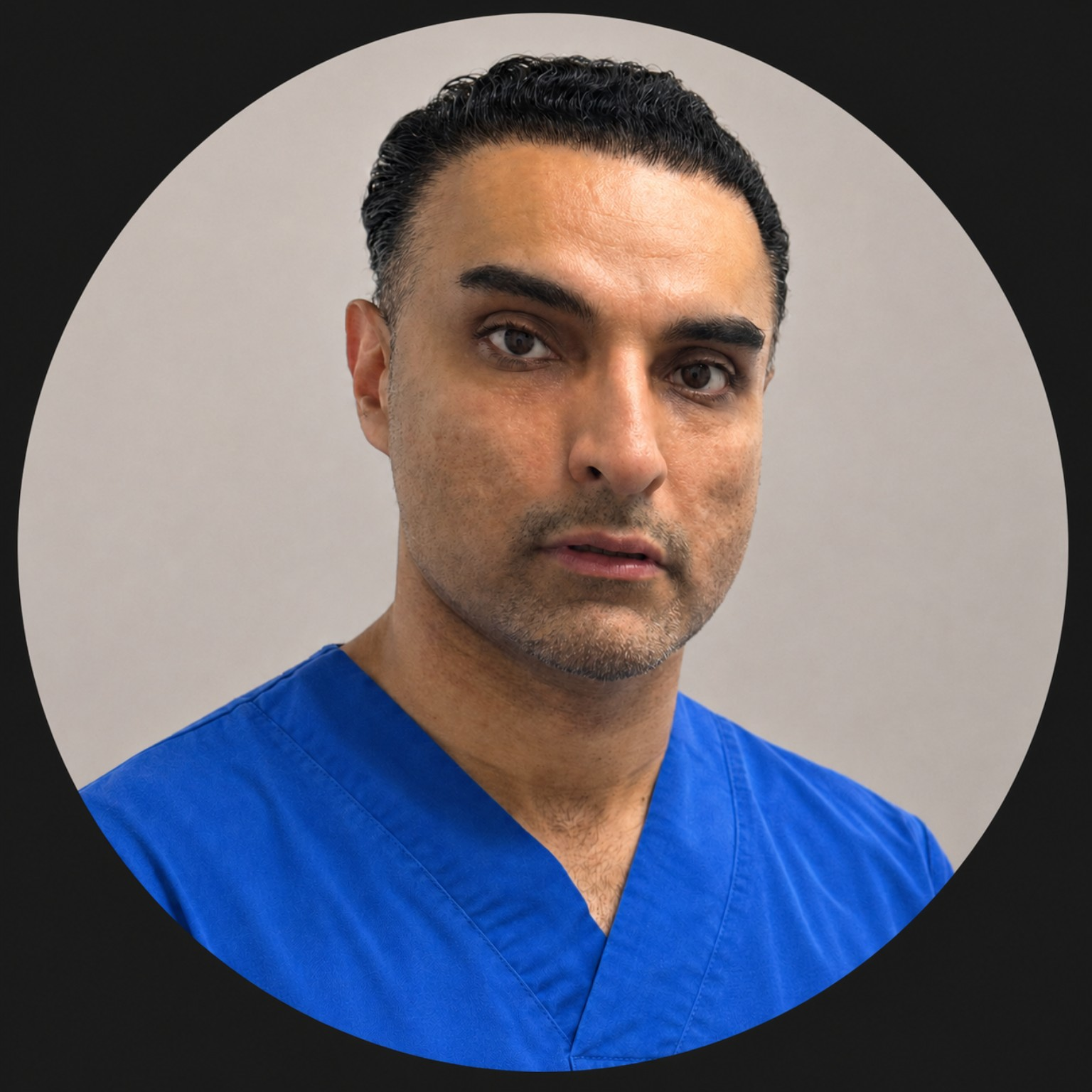
About Dr Harpreet Kalra
Dr Harpreet Kalra
was born in Norway. His hair-restoration consultations consider the cause of hair loss, donor supply and the longer-term plan. UK GMC reference 7126076.
Start with an assessment
Contact Denmark Hair Transplant Clinics to discuss your concerns and the available appointment arrangements.
Request a consultation