


Stress can trigger shedding, but it is not the only cause
Telogen effluvium is an increase in shedding after the normal hair cycle is disrupted. A major stressful event, illness, childbirth, surgery, marked weight loss or a change in medicine may be relevant. Sometimes no clear trigger is found. A person can also have temporary shedding alongside inherited pattern thinning.
The loss usually affects the scalp broadly rather than creating a distinct smooth patch. Noticing more hair after washing does not by itself confirm telogen effluvium, and blaming every change on stress can delay diagnosis of another condition.
Why the timing can be confusing
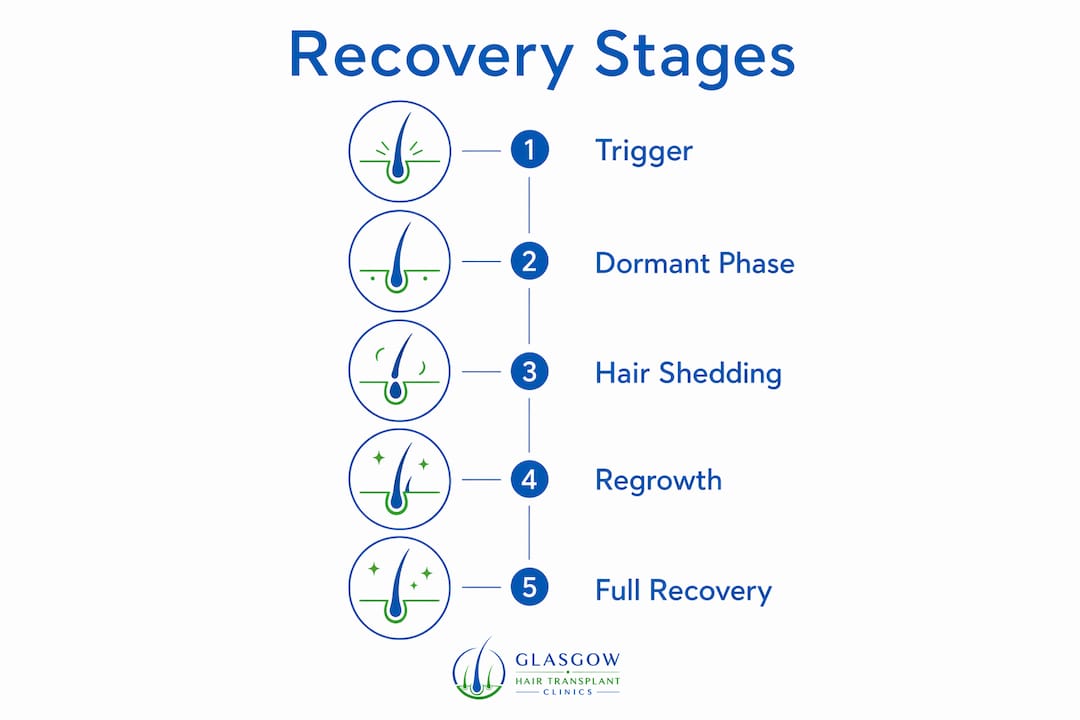
Shedding often becomes noticeable around three months after a trigger. By then, the original illness or stressful period may have passed. The shedding phase commonly lasts three to six months, while recovering the previous volume can take longer. These are broad patterns rather than deadlines for an individual person. The British Association of Dermatologists leaflet explains the hair cycle and usual course.
Write a short timeline covering the months before shedding began. Include health changes, significant weight loss and medicines started or stopped. Do not stop a prescribed medicine yourself because the timing appears to match.
When to speak with a doctor
Arrange an assessment if the diagnosis is uncertain, shedding persists, the loss is rapidly increasing or it is affecting your wellbeing. You do not need to wait six months before asking for help. Patchy loss, scalp redness, pain, crusting, pustules or eyebrow loss also deserve review.
The clinician will ask about your history and examine the pattern and scalp. Tests for a possible deficiency, thyroid disorder or other cause are selected according to the findings; not everyone needs the same blood panel. Further examination or specialist referral may be needed if the diagnosis is unclear. See Danish patient information on shedding and other forms of hair loss.
Practical steps during recovery
- Use gentle brushing and avoid styles that repeatedly pull on the scalp.
- Limit harsh heat or chemical processing if hair is breaking or the scalp is irritated.
- Eat regularly and avoid crash diets. Discuss an unusually restricted diet or suspected deficiency with a clinician.
- Keep a simple monthly photo record under similar lighting instead of repeatedly counting hairs.
- Bring persistent or changing symptoms to the clinician's attention.
Supplements should be chosen for an identified need. More iron or vitamins do not automatically mean faster regrowth. A comfortable hair-care routine can reduce additional damage without promising to change the pace of the underlying hair cycle.
Support your wellbeing without blaming yourself
Hair loss can itself become a source of stress. That does not mean you caused it or that you have failed if shedding continues while you are trying to relax. Ask your GP about support if anxiety, sleep problems or low mood are difficult to manage.
You may find it useful to limit repeated checking, speak with someone you trust and decide with your clinician how often progress should be reviewed. Cosmetic camouflage or a different hairstyle is an option if it helps you feel more comfortable.
Where medicines and surgery fit
Acute telogen effluvium commonly improves without a hair-growth medicine. Addressing an identified cause is different from trying to force the normal regrowth cycle to happen immediately. Persistent shedding should lead to a review of the diagnosis and possible ongoing triggers, not automatically to a procedure.
If pattern loss is also present, its treatment can be discussed separately, including suitability, adverse effects and ongoing use. A transplant does not treat temporary shedding and should not be offered simply because recovery feels slow. The hair loss advice hub can help you prepare questions for an assessment.
About Dr Harpreet Kalra
Dr Harpreet Kalra was born in Norway. His hair-restoration consultations consider the cause of hair loss, donor supply and the longer-term plan. UK GMC reference 7126076.
Discuss persistent or unexplained shedding
Contact Denmark Hair Transplant Clinics about assessment. A doctor should review sudden, patchy or inflamed hair loss before cosmetic treatment is considered.
Request a consultation