

Hair loss facts at a glance
Hair loss is common, but its causes vary. A receding hairline, a widening parting and a sudden bald patch can point to different conditions. Understanding which one is involved matters more than finding a single national headline figure.
| Finding | What it means |
|---|---|
| Around 50% of men over 50 | Estimated prevalence of pattern hair loss, according to Alopecia UK. |
| Around 50% of women over 65 | Alopecia UK's estimate for female pattern hair loss in this age group. |
| 50–100 hairs a day | The normal daily shedding range described by the NHS. |
| 0.58% of adults in 2018 | Recorded history of alopecia areata in a large UK primary-care study. |
| 84.7% male; 15.3% female | Average surgical procedure split reported in the ISHRS 2025 international practice survey, covering 2024. |
These figures measure different things. The age-specific estimates are not percentages of the whole UK population, and the surgical survey does not count everyone living with hair loss. The sections below explain the findings in context.
How common is hair loss in the UK?
Pattern hair loss, also called androgenetic alopecia, is the most common form of gradual hereditary thinning. Temporary shedding and alopecia areata are separate diagnoses. Some people experience more than one condition, so adding together figures from different studies can count the same person twice.
Alopecia UK's estimates suggest that pattern loss affects about half of men over 50 and half of women over 65. That includes varying degrees of thinning; it does not mean that everyone counted is completely bald. Pattern loss can also start much earlier.
There is no current, comprehensive UK headcount covering every cause of hair loss in the sources used here. An estimate collected in one age group cannot simply be multiplied by the country's entire population. Equally, international transplant activity cannot establish how many people have hair loss in Denmark.
For a reader comparing their own hair with these figures, the useful questions are more specific: where is the density changing, how quickly has it changed, and is there increased shedding, breakage or scalp irritation? Those details help guide an assessment.
Male pattern hair loss: age, genetics and DHT

Male pattern hair loss commonly affects the temples, front and crown. Hairs in susceptible areas gradually become finer and shorter, making the scalp more visible. The British Association of Dermatologists (BAD) describes a hereditary process involving sensitivity to androgens, including dihydrotestosterone, or DHT.
Why does DHT affect some follicles?
DHT is made from testosterone. In susceptible follicles, its effects contribute to progressive miniaturisation: the follicles produce increasingly fine hairs. This does not mean that every man with a receding hairline has an abnormally high testosterone level. The response of the follicle matters.
Family history can come from either side. Inheritance is complex, so one relative's hairline cannot predict exactly when someone will thin or how far it will progress. Brothers can also develop different patterns.
At what age does male hair loss start?
It can begin after puberty and becomes more common with age. There is no fixed timetable. A man who notices temple recession in his twenties may follow a different course from someone who first notices crown thinning in his fifties. Age alone cannot establish the diagnosis or the right treatment.
What does the Norwood Scale show?
The Norwood Scale describes visible patterns of recession and crown loss, from limited changes through to more extensive baldness. It helps a clinician record which areas are affected and compare them over time.
A stage number is only part of surgical planning. Two people at the same stage may have different scalp areas to cover, different hair thickness and very different donor supplies. Photographs taken in similar lighting are also more useful for tracking change than comparisons between wet hair, dry hair and different hairstyles.
Female pattern hair loss and age
Women often notice a wider parting or reduced volume across the top of the scalp. The front hairline may remain relatively well preserved. The BAD's female pattern hair-loss guidance explains that affected hairs become finer, shorter and lighter, with considerable variation in severity.
Why does the parting become more visible?
As more hairs become fine, they provide less coverage. A ponytail may feel smaller even when there is no distinct bald patch. Female pattern loss can start in adulthood and becomes more common later in life; it should not automatically be dismissed as an unavoidable cosmetic change.

The Sinclair scale shown above records increasing visible thinning around the central parting. It is a description of appearance, not a prediction that every woman will move through all five grades.
Is it always a hormone problem?
Most women with pattern hair loss do not have abnormal androgen levels, according to Alopecia UK. A clinician considers the whole history, including other symptoms, rather than assuming that thinning proves a hormone imbalance.
Sudden widespread shedding needs a different assessment from gradually reduced density. Our guide to hair transplantation for women explains why both the cause of the loss and the condition of the donor area need to be established before surgery. A visibly thin area alone does not establish suitability.
Alopecia areata: UK statistics and different forms

Alopecia areata usually causes defined patches of hair loss. It is an immune-mediated condition affecting hair follicles and can involve the scalp, beard, eyebrows or other body hair. It differs from the gradual miniaturisation seen in pattern baldness.
What did the UK study find?
Harries and colleagues' 2022 study examined primary-care records covering 4.16 million adults and children between 2009 and 2018. Adult prevalence was 0.58% in 2018, and the incidence rate was 0.26 new cases per 1,000 person-years. New diagnoses peaked at ages 25–29.
Prevalence describes how many people had a recorded history; incidence measures new cases over time. In their explanation of the findings, the researchers stressed that records could not reliably distinguish active disease from previous episodes that had recovered. The 0.58% figure is therefore not a count of adults with active bald patches today.
Alopecia totalis and alopecia universalis
BAD guidance uses alopecia totalis for loss of all scalp hair and alopecia universalis for loss involving the scalp and body. These are extensive forms of alopecia areata. Regrowth can occur because the follicles are not normally destroyed, but the course is unpredictable and relapses are possible.
Around 20% of affected people have a family history, according to the same guidance. That is not a 20% risk of passing it to a child. Other autoimmune conditions and atopic conditions can also occur alongside alopecia areata.
Does alopecia areata need different treatment?
Yes. Depending on the extent and circumstances, management can include observation, topical or injected corticosteroids and specialist treatments. The BAD's living guideline also covers newer treatment options, including JAK inhibitors for selected patients. Availability and eligibility require individual assessment.
A new patch should be assessed rather than treated as ordinary pattern loss. Our alopecia guide explains why identifying the type of alopecia comes before considering a hair restoration procedure.
Normal shedding, stress and telogen effluvium
The NHS describes losing 50–100 hairs a day as normal. Seeing hair after washing is not, by itself, evidence of permanent baldness. A sustained increase or a noticeable reduction in density gives a clinician more useful information than a single day's count.
How does the hair cycle work?
Hair passes through growth, transition and rest. The growth phase is called anagen; catagen is the brief transition; telogen is the resting phase before shedding. According to Alopecia UK's explanation of telogen effluvium, follicles normally move through the cycle at different times, so the scalp does not shed all its hair together.
Why can shedding begin months after stress?
BAD guidance on telogen effluvium explains that around 15% of scalp follicles are normally in the resting and shedding phase. In telogen effluvium, the proportion can rise to 30% or more after a disruption to the cycle.
Triggers include a significant illness, childbirth, surgery, marked weight loss or a stressful event. Shedding often starts about three months later. Someone who feels well by then may not connect the hair change with an earlier illness or difficult period.
How long does temporary shedding last?
Shedding commonly lasts three to six months, with visible volume taking longer to recover. In about one in three diagnosed cases, no trigger is identified. Persistent shedding may need investigation for problems such as iron deficiency or thyroid disease.
Temporary shedding can also occur alongside pattern hair loss. If the scalp is becoming progressively more visible, or the diagnosis is uncertain, an assessment is more useful than repeatedly changing shampoos or counting every hair on a pillow.
Other causes and factors linked with hair loss
Medicines, including antidepressants
Some medicines can cause increased shedding. The timing of a new prescription or dose change can be relevant, but it does not prove that the medicine is responsible. Illness and stress may be changing at the same time.
Etminan and colleagues' study of different antidepressants found differences in the risk of recorded hair loss between medicines. Published case reports also describe shedding associated with individual drugs. Neither type of evidence means that everyone taking an antidepressant will lose hair, or that this is a common effect of every SSRI.
If shedding starts during treatment, discuss it with the prescriber. Do not stop or reduce a prescribed medicine on your own. The clinician can consider the timing, alternative causes and whether a treatment change is appropriate.
Nutrition, iron and restrictive diets
The American Academy of Dermatology (AAD) lists inadequate protein, iron, zinc and biotin among nutritional causes of hair loss. A history of restrictive eating, significant weight loss or symptoms suggesting a deficiency can help guide investigation.
That does not make a general hair supplement the answer to every widening parting. A deficiency and hereditary pattern loss can require different approaches. When a deficiency is established, correcting it addresses that problem; it does not establish that every other cause of thinning has been excluded.
Can taking too many vitamins cause hair loss?
More is not always better. The AAD warns that excessive vitamin A, vitamin E and selenium have been linked with hair loss. Check the ingredients of overlapping supplements, particularly if several products are sold for hair, skin or general wellbeing.
Before buying a course of supplements, it is useful to establish what problem the product is intended to address and whether there is evidence of that problem. A list of impressive ingredients is not the same as evidence that someone needs them.
Smoking and male pattern hair loss
A study by Salem and colleagues, published in 2021, compared 500 smokers with 500 non-smokers aged 20–35. Signs of androgenetic alopecia were recorded in 425 smokers (85%) and 200 non-smokers (40%).
This was a cross-sectional study from Egypt. It found an association, but could not prove that smoking caused the difference. These percentages should not be used as a prediction for UK men or as evidence that stopping smoking will reverse established baldness.
Smoking history is still relevant when discussing general health and planning treatment. For anyone considering surgery, the consultation should include the clinic's advice about smoking and recovery.
Traction alopecia and tight hairstyles
Traction alopecia results from repeated pulling on the hair. Tight ponytails, buns, braids, weaves and extensions can place tension on particular areas. The pattern often follows the places where that tension is strongest.
Early traction loss may improve when the pulling stops. Longstanding, repeated tension can permanently damage follicles. Soreness, broken hairs, redness or thinning around a tight style are reasons to change the hairstyle and seek advice if the problem persists.
Traction alopecia can affect people from different backgrounds. It is distinct from trichotillomania, a condition involving recurrent hair pulling, which may need a different kind of support.
Scalp inflammation and scarring alopecia
Some conditions damage and scar the follicles themselves. The AAD distinguishes scarring hair loss from forms in which follicles remain capable of growing hair. Pain, burning, significant inflammation or an unusual pattern of loss should not simply be assumed to be hereditary thinning.
A diagnosis is especially important before a cosmetic procedure. A photograph showing an empty area cannot establish whether the underlying condition is active or whether transplantation is appropriate.
Hair loss, confidence and everyday life
The effect of hair loss is personal. Someone with relatively limited thinning may feel very distressed, while another person with extensive loss may be comfortable with their appearance. The amount of visible loss does not measure how much support someone needs.
What do surveys tell us?
In Alfonso and colleagues' 2005 European survey, 1,536 men aged 18–45 were interviewed across five countries, including the UK. Among the 729 who reported hair loss, 62% agreed that losing hair could affect self-esteem and 43% felt that it reduced personal attractiveness.
These findings describe men's reported views in an older multinational survey. They are not current UK rates of clinical depression, and they do not establish how employers or other people judge someone with thinning hair.
Getting support without pressure to have treatment
Some people want medical treatment; others prefer a different haircut, a wig, cosmetic camouflage or no intervention. A consultation should make room for those choices and for realistic expectations.
The NHS advises speaking to a GP if hair loss is affecting wellbeing. Support can be worthwhile whether or not someone decides to take medication or have surgery. A cosmetic decision should not depend on a promise that changing hair will solve every concern about confidence.
Hair-loss treatments: what does the evidence show?
Treatment studies measure different outcomes: extra hairs in a marked area, change in photographs, reduced shedding or patient satisfaction. A headline “success rate” needs an explanation of the outcome, the people treated and the length of follow-up.
Topical minoxidil
Topical minoxidil is applied to the scalp and is used for male and female pattern hair loss. It may help maintain or improve coverage, but the degree of response varies. Benefits generally depend on continued use, as explained in NHS patient information.
In Olsen and colleagues' 48-week randomised trial, involving 393 men, 5% minoxidil solution performed better than 2% solution and placebo on the study's hair-growth assessments. This supports efficacy in the population studied; it is not a promise that every user will regain a full head of hair.
Solution and foam may differ in convenience and scalp tolerability. NHS patient information on minoxidil describes possible irritation and unwanted hair growth. A pharmacist or clinician can help establish which preparation is suitable and how to use it.
Is oral minoxidil better?
Oral minoxidil is prescribed off-label for hair loss in selected patients. It is not simply an interchangeable version of the topical product: it can affect blood pressure and cause problems such as fluid retention or palpitations. Gloucestershire Hospitals' guidance describes assessment and monitoring during treatment.
A 2024 randomised trial in JAMA Dermatology enrolled 90 men; 68 completed 24 weeks. Oral minoxidil at 5 mg daily was not superior overall to topical 5% minoxidil twice daily on the main hair-density outcomes. These are study regimens, not personal dosing instructions.
Unwanted body or facial hair and headaches were more frequent in the oral group. The practical choice therefore depends on suitability, side effects and the ability to follow a treatment plan, alongside expected benefit.
Finasteride
Finasteride reduces the conversion of testosterone to DHT and is used for male pattern hair loss. The aim can be to slow further thinning as well as improve growth. Our hair-loss medication guide explains where it may fit into a longer-term plan.
Kaufman and colleagues' trials initially enrolled 1,553 men aged 18–41. The published results showed improvements compared with placebo, with benefits continuing during the second year of treatment. The participants' age range, diagnosis and continued use matter when interpreting the findings.
Potential benefit must be considered alongside risk. In May 2026, the UK MHRA updated warnings about psychiatric effects and sexual dysfunction, including reports of sexual effects persisting after treatment stops. A prescriber should discuss these issues and the patient information leaflet before treatment.
The MHRA advises patients taking finasteride 1 mg who develop depressed mood, depression or suicidal thoughts to stop treatment and contact a doctor promptly. Finasteride is not suitable for everyone; the NHS does not recommend it as a hair-loss treatment for women.
How should progress be assessed?
Agree what is being assessed before starting: reduced progression, increased density, easier styling or another specific goal. Record comparable photographs and arrange a review at an appropriate interval. Comparing a bright overhead photograph with a darker, styled photograph can exaggerate apparent change.
A treatment that preserves existing coverage may be valuable even if the hairline does not visibly move forward. Conversely, an early encouraging photograph does not establish a lasting result. The evidence and the review plan should address the outcome that matters to the patient.
Hair transplant statistics: who has surgery?
The ISHRS 2025 Practice Census asked member physicians about their work in 2024. It received 247 responses, a 26% response rate. This international survey describes participating practices, rather than every clinic or the UK population.
The average surgical procedure split was 84.7% male and 15.3% female. Ages 30–49 made up the largest combined share of surgical patients: 58.7% of men and 54.0% of women. These are descriptions of activity, not recommended ages for surgery.
| Method | Men | Women |
|---|---|---|
| FUE | 85.4% | 68.2% |
| FUT | 12.5% | 30.0% |
| FUE + FUT | 2.1% | 1.9% |
Source: ISHRS 2025 Practice Census. Rounding affects totals. FUE was most commonly reported, but popularity does not prove that it is the right option for every patient. The difference between male and female procedure mixes also shows why a single headline percentage can miss useful detail.
FUE, FUT and DHI explained
A hair transplant moves selected follicles from a donor area to an area needing coverage. It redistributes a limited supply of hair. The method of collecting grafts, the implantation technique and the design of the result are related but separate parts of the operation.
Follicular unit excision or extraction (FUE)
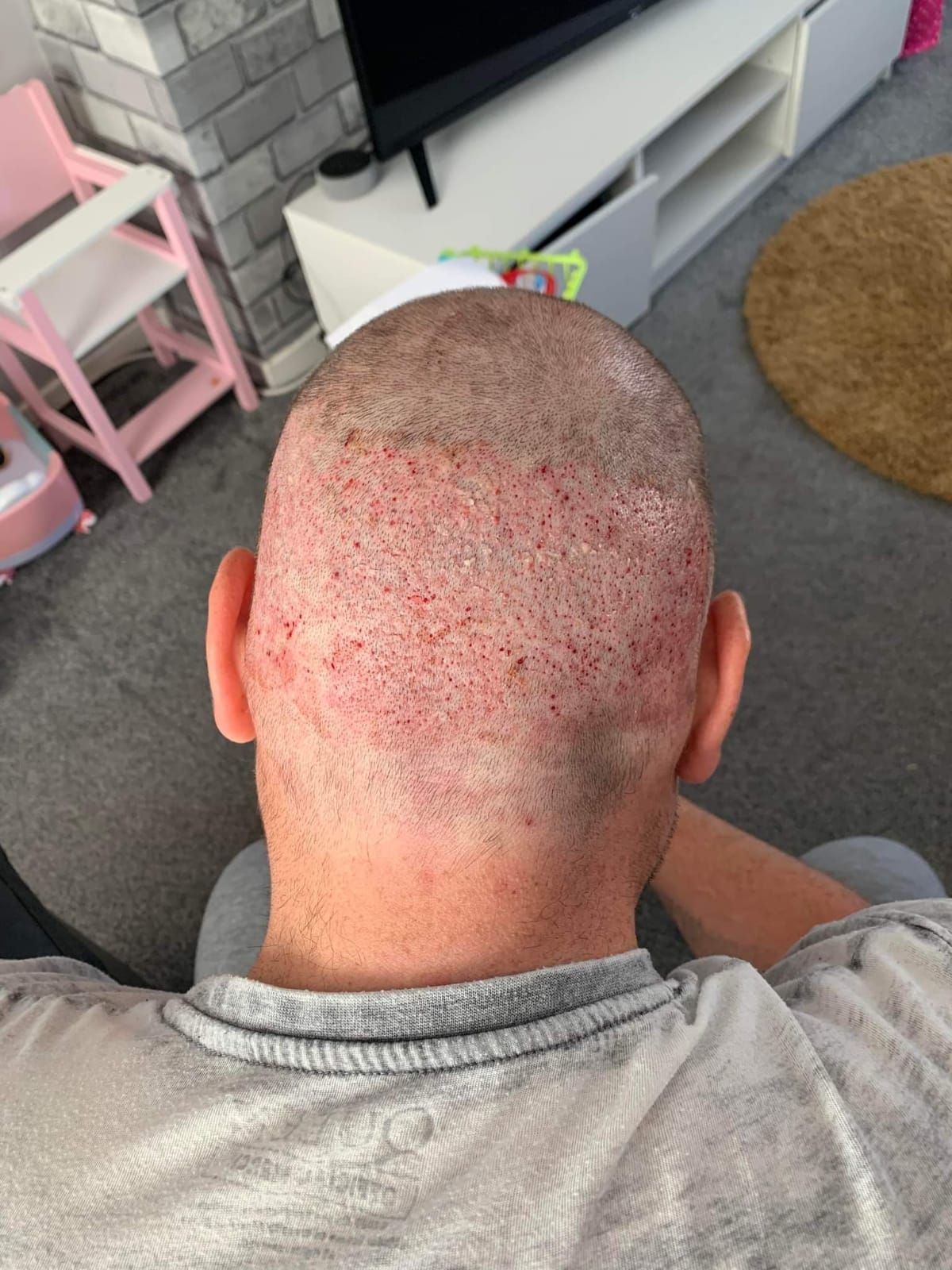
During FUE hair transplantation, individual follicular units are removed from the donor region using small punches. The grafts are then placed into prepared recipient sites. The NHS describes the small scars left by this approach.
FUE is surgery, even though it avoids a single strip wound. Planning must consider how much can be harvested, how evenly extraction is distributed and what the remaining donor area will look like at the patient's preferred hair length.
The treatment label alone does not establish graft survival, naturalness or final density. Ask to see the proposed donor plan and the intended coverage, including how future loss in the surrounding hair has been considered.
Follicular unit transplantation using a strip (FUT)
With strip FUT, a strip of hair-bearing scalp is removed and divided into grafts. The donor wound is closed, leaving a linear scar. Surrounding hair may cover that scar, but its visibility matters for someone who prefers a very short haircut.
FUT remains a surgical option for selected patients. It is misleading to describe it as universally obsolete, just as it would be misleading to describe FUE as scar-free. The NHS outlines both approaches; the choice requires a discussion of donor characteristics, scarring and the overall surgical plan.
Where does DHI fit?
Direct hair implantation (DHI) describes an implantation approach using an implanter tool. Grafts may first be collected by FUE. The terms therefore do not always describe competing operations: one can describe harvesting and the other placement.
Direction, angle and distribution still need careful planning. That is particularly apparent in eyebrow transplantation and beard transplantation, where the desired pattern of growth differs from the scalp.
Graft survival and cosmetic success
A quoted graft-survival percentage is not the same as the probability of achieving a particular appearance. Even growing grafts can provide disappointing coverage if the design, distribution or original expectations were unsuitable.
Ask how a figure was measured, when the result was assessed and whether it describes this clinic's patients. Useful examples show comparable lighting, views of both the recipient and donor regions, the graft count and the follow-up interval. A selected before-and-after photograph cannot establish a universal success rate.
How long does the result take?
Healing and hair growth have different timetables. Scabbing and tenderness are early recovery issues; visible new growth develops over months. Transplanted shafts commonly shed before new growth becomes noticeable.
Our hair transplant recovery timeline describes early growth from around months three to four, more established coverage later in the year and continued maturation that can extend to 12–18 months, particularly in the crown. Individual progress varies, and an early photograph is not a final assessment.
Platelet-rich plasma (PRP): what can it offer?
PRP treatment uses a sample of the patient's blood, processed to obtain plasma with a higher platelet concentration. This is injected into the scalp. It is intended to support hair growth in suitable areas; it does not move donor follicles into bald skin.
What have clinical studies found?
Gentile and colleagues' 2015 randomised placebo-controlled trial reported improvements in hair growth. However, findings have not been consistent across all studies.
A 2020 randomised pilot study by Gressenberger and colleagues enrolled 30 men: 20 received PRP and 10 received saline. It did not find a significant advantage in the measured hair outcomes. The small sample and differences between treatment protocols limit how far individual trials can be generalised.
What should a PRP consultation cover?
Ask what evidence supports the proposed protocol, how many sessions are planned, what outcome will be measured and what the full course will cost. Preparation methods and treatment schedules differ, so results from one protocol should not automatically be promised for another.
Possible treatment effects include pain, bruising, swelling and minor bleeding. Using the patient's own blood does not make the procedure free of side effects. Our PRP treatment page provides further information for discussing suitability with the clinic.
Which hair-loss treatment is right for me?
Begin with the cause. Gradual hereditary loss, immune-mediated patches, persistent shedding and traction damage do not share one treatment pathway. The NHS recommends establishing the cause with a GP before approaching a commercial hair clinic.
What happens during an assessment?
The AAD describes an assessment involving medical history and examination of the scalp and hair. Depending on the findings, a clinician may recommend blood tests or a scalp biopsy. Not everyone needs every test.
Bring a medication list, details of when the change began and any comparable older photographs. Mention scalp symptoms, recent illness, major weight change, pregnancy-related changes and family history. These details can help distinguish a recent trigger from a longer pattern of thinning.
When might medication be considered?
For confirmed pattern loss, a discussion may focus on preserving existing hair, potential regrowth and the commitment involved in ongoing treatment. Ask when to review progress, which side effects require contact and what is likely to happen if treatment is stopped.
It is reasonable to decide that a medicine does not fit your priorities. Understanding the practical commitment is part of an informed decision, especially if the main aim is maintaining coverage over several years.
When might a transplant be considered?
Surgical planning needs to establish a suitable diagnosis, realistic goals and an adequate donor supply. The donor region should be examined, rather than assessed solely from a photograph of the hairline.
A hairline transplant and a crown transplant can make different demands on the same finite supply. The plan should explain which area takes priority and how much reserve is being preserved. The surrounding native hair may continue thinning after surgery.
Where hair loss involves scarred skin, a separate assessment of the cause and stability is needed. Our scar repair guide explains why these cases require individual planning.
Questions to ask at a Denmark consultation
- What is the diagnosis, and is further investigation needed?
- What improvement is realistic for my starting point?
- What are the alternatives, including choosing no treatment?
- How will donor hair, scarring and possible future thinning be managed?
- What does the quoted cost include, and who provides follow-up?
Our Denmark hair transplant cost guide explains what to check in an individual written DKK quotation. Confirm the responsible clinician, treatment location, relevant Danish registrations and aftercare arrangements. A clear plan should connect the diagnosis, expected coverage, risks, recovery and costs to your own circumstances.
Sources and further reading
Clinical guidance and research are linked beside the relevant claims throughout this article. Publication dates and study periods are identified where they affect interpretation. Older findings are not presented as new UK measurements taken in 2026.
- Alopecia UK: androgenetic alopecia; British Association of Dermatologists: patient information leaflets; NHS: hair loss.
- Harries et al. (2022): the epidemiology of alopecia areata, a population-based cohort study in UK primary care.
- Etminan et al. (2018): risk of hair loss with different antidepressants; Salem et al. (2021): smoking and androgenetic alopecia.
- Alfonso et al. (2005): the psychosocial impact of hair loss among men in Europe.
- Olsen et al. (2002): topical minoxidil trial; Kaufman et al. (1998): finasteride trials; Penha et al. (2024): oral versus topical minoxidil.
- MHRA (May 2026): updated finasteride and dutasteride safety warnings.
- ISHRS 2025 Practice Census, reporting 2024 activity; NHS: hair transplantation.
- Gentile et al. (2015): PRP randomised trial; Gressenberger et al. (2020): PRP placebo-controlled pilot study.
Image credits
Male pattern hair-loss photograph: Lkinkade, CC BY-SA 2.5. Sinclair scale: Sinclair R, Torkamani N and Jones L, CC BY 4.0. Both reproduced without alteration. Alopecia areata photograph: Kevlaraz, CC0. These educational images are not Denmark clinic patient results.
About Dr Harpreet Kalra
Dr Harpreet Kalra was born in Norway and works in hair restoration. His consultations consider the pattern of hair loss, donor-area quality and treatment options. UK GMC reference: 7126076. Confirm the responsible clinician and relevant local registrations for your proposed care.
Discuss your hair loss in Denmark
Contact Denmark Hair Transplant Clinics to discuss the cause of your hair loss and the available options. Copenhagen consultations are at Frederiksborggade 15, 1358 København, Denmark. Confirm appointment and treatment arrangements before travelling.
Request a consultationRelated articles
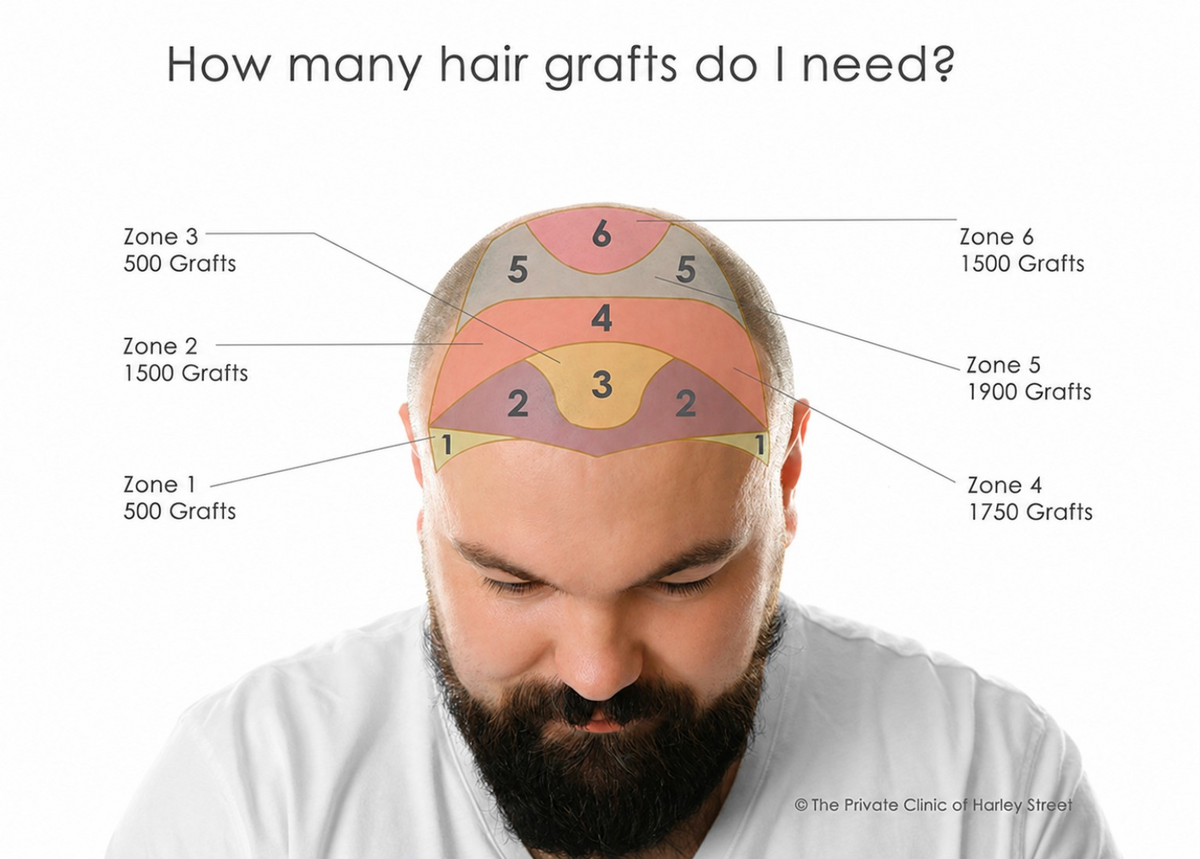
How many grafts do I need?
How the hairline, crown and donor supply affect graft planning.

Scottish footballers with hair transplants
Publicly discussed cases and what photographs can tell us.