Male Pattern Baldness
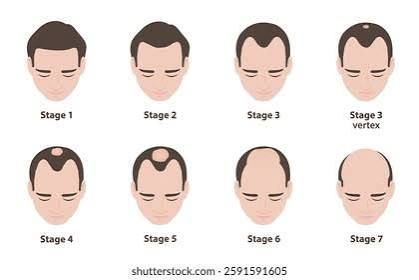
Male pattern baldness, or androgenetic alopecia, is the leading cause of male hair loss on the crown, affecting approximately 85% of men at some point in their lives. This hereditary condition is influenced by genetic factors and the hormone dihydrotestosterone (DHT).
But what is DHT? Well, DHT causes hair follicles to shrink, weaken, and eventually cease producing new hair, resulting in thinning hair, a widening part, and a receding on the crown.
Although this article focuses on male pattern baldness and crown thinning, it is worth noting that female pattern hair loss also exists and can cause similar symptoms in women. However, rather than the crown area, women rend to lose hair in the mid-parting, as depicted by the Ludwig Scale.
Despite the slow progression of male pattern baldness, early detection enhances the effectiveness of treatment. Observing a widening part or receding hairline should prompt immediate action to halt further hair loss. If you’re suffering with some hairline recession, then you may want to keep a keen eye out for hair loss on your your crown!
Environmental Factors
Although research on this topic is hotly contested, some hair practices may be a factor in causing crown hair loss, such as wearing construction helmets or tight fitting hats. From builders to helicopter pilots, crown hair loss may be more common amongst hat wearers than you think!
So, why does wearing a hat cause hair loss? Whilst there is no evidence that directly links hat wearing with crown hair loss, there are a number of factors that we may wish to consider to limit our chances of crown thinning.
If you wear a hat on a daily basis, then you should definitely be aware of the effects of this. Constant friction on the scalp or crown area may cause, or at the very least accelerate, hair loss symptoms.
Moreover, wearing a hat for multiple hours a day can create a hot and sweaty atmosphere on head, increasing dirt and bacterial residue. Although rare, this may also speed up hair loss symptoms on the crown.
Other Factors
Aside from male pattern baldness and environmental factors, other factors can lead to crown hair loss, such as stress, medical conditions, and certain hair practices.
Stress can trigger the body’s fight-or-flight response, reducing blood flow to the scalp and hair follicles and potentially causing hair loss. Medical conditions like alopecia areata, thyroid disease, and lupus may also contribute to balding on the crown.
Moreover, certain hair practices, including over-styling, over-processing, and tight hairstyles, can damage hair follicles and lead to hair loss. Identifying and addressing these factors helps to halt further hair loss and encourages healthy hair growth.
Early Detection: How to Identify a Thinning Crown
Detecting thinning at the crown early is vital for successful treatment, as it allows you to address the issue before it becomes more severe, helping you prevent further hair loss and restore your hair’s health and density. To determine whether you have a thinning crown, you can use various methods, such as visual inspection, touch, and comparing photos taken at different points in time.
As hairs fall from your head, the distance between each hair follicle on the crown increases. This is what causes the hair on your crown to look visibly thinner over time. In some cases, this hair loss may go on for so long that is causes a bald spot on your crown.
Monitoring your hair and scalp for any changes enables you to spot early signs of hair loss and seek treatment promptly.
Visual Inspection
Visually inspecting your crown is a simple yet effective method to identify signs of hair loss. Look for thinning hair, a widening part, or a receding hairline, which can indicate male pattern baldness or other causes of hair loss.
If you think you’re beginning to suffer with signs of crown hair loss, then don’t hesitate to book yourself in for a free consultation with one of our consultants. This way we can help to diagnose your crown thinning symptoms and work out an appropriate treatment for your hair loss.
Touch
Another method to detect hair loss is by touch. Gently run your fingers through your hair and scalp, feeling for any changes in hair density and texture. This tactile examination can help you identify thinning areas or bald spots that may not be immediately visible.
The touch test is perhaps more useful for people who are suffering with initial signs of crown thinning. If a bald spot is not yet visible, then a touch test every couple of weeks may be wise.
Any changes should be a signal to seek professional advice, identify the cause, and explore potential treatment options.
Comparing Photos
Comparing past and present photos of your hair can also help you identify any changes in hairline or crown thickness over time. By examining photos taken at different points in time, you can detect receding hairlines, thinning hair, or bald spots on the crown that may not be noticeable through touch or visual inspection alone.
Noticing any changes should prompt consultation with a medical professional to discuss potential causes and treatment plans.
Treatment Options for Balding on Crown
After identifying the cause of your balding crown, exploring available treatment options becomes vital in addressing the issue and restoring your hair’s health. Some potential options for treating hair loss on the crown include:
Since each treatment has unique benefits and drawbacks, consulting with a medical professional is recommended to determine the solution best fitting your specific situation.
Topical Treatments
Topical treatments like Minoxidil can help stimulate hair growth and improve hair density. Minoxidil, also known as Rogaine®, is applied to the scalp twice daily and works by promoting increased blood flow to the hair follicles. This increased blood flow can help strengthen weakened follicles and encourage hair growth, making it an effective treatment option for many individuals experiencing hair loss on the crown.
Keep in mind, Minoxidil doesn’t provide a permanent solution for hair loss. However, for patients who are suffering with the earlier signs of hair loss at the crown, or are worried about the side effects of more powerful medication, then minoxidil may be a great choice.
Oral Medications
Oral medications such as Finasteride and Dutasteride can also help reduce hair loss and promote hair regrowth. Both medications work by inhibiting the enzyme responsible for converting testosterone into DHT, thus reducing DHT levels in the body and helping to prevent hair thinning by protecting the hair follicle from damage.
For patients suffering with early to mid-stage crown thinning or those who have had a hair transplant with us, DHT blocking medication is usually recommended by our consultants and surgeons. DHT blockers have the largest body of clinical research behind it and is relatively low risk for the benefits it offers in combatting hairline and crown thinning.
Hair Transplant Surgery
For individuals with mid to severe crown hair loss (characterised by a bald spot), hair transplant surgery may be the most effective and permanent solution. This procedure involves harvesting hair from the back and sides of the scalp (donor area) and transplanting it into the area of hair loss – in the case of this article, the crown!
If you’re interested in a DHI or FUE hair transplant, then don’t hesitate to book your free consultation.
Alternative Therapies
Alternative therapies, such as low-level laser therapy (LLLT) and platelet-rich plasma (PRP) therapy, may show promising results for some individuals experiencing hair loss on the crown. LLLT involves delivering photons to the scalp tissues, stimulating hair growth, while PRP therapy involves injecting a substance derived from the patient’s blood into the scalp to assist in healing tissues and promoting hair growth.
While these hair loss treatments may not be effective for everyone, they can offer a non-surgical option for those seeking to address their hair loss on the crown.
Summary
In conclusion, understanding the causes and symptoms of balding on the crown is essential for early detection and effective treatment. By exploring various treatment options, such as topical treatments, oral medications, hair transplant surgery, and alternative therapies, you can find the most suitable solution for your specific hair loss situation.
Additionally, adopting lifestyle changes like proper hair care, a balanced diet, and effective stress management techniques can help prevent further hair loss and promote healthy hair growth. Take control of your hair’s health today and restore your youthful confidence.