

Dutasteride is one of the most effective hair loss medications on the market today. Available on prescription, this hair loss treatment is fantastic for those suffering with early signs of hair loss. On this page, you’ll find everything from: medication, dosage, efficacy, and side effects.
What is Dutasteride?
Put simply, dutasteride is a medication that is typically used to treat benign prostatic hyperplasia (BPH). As well as this, dutasteride has also been shown to be clinically effective in treating hair loss.
Dutasteride is the generic name for the medication originally sold under the brand name Avodart , developed by GSK. Generic dutasteride 0.5mg contains the identical active ingredient at the same dose as Avodart and is bioequivalent, but is typically available at a lower cost. In the UK, you may be prescribed either the branded or generic version depending on your prescriber and availability.
Dutasteride works by reducing the amount of the sex hormone dihydrotestosterone (DHT) absorbed by the hair follicles. In turn, this helps to slow down the effects of male pattern hair loss (androgenetic alopecia).
Whilst dutasteride will never be able to regrow hair follicles that have descended into dormancy (that would require an FUE Hair Transplant), it is an effective early-stage medication that can be given to patients who are genetically predisposed to androgenetic alopecia and do not respond to generic medication for hair loss.
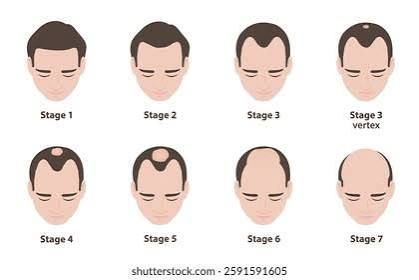
If a patient is suffering with early stages of hair loss (anything categorised as stage 3 on the Hamilton-Norwood scale of less) then dutasteride has been shown to be one of the most effective medications at treating hair loss, as well as lowering your risk of prostate cancer.
The History of Dutasteride
Believe it or not, dutasteride was not always developed to treat hair loss. Dutasteride was first developed in 1993, and became medically approved in 2001. Since then, it has become a common treatmen for an enlarged prostate (benign prostatic hyperplasia) and reduce a patient’s likelihood of catching prostate cancer.
In much the same way as dutasteride can help to negate the need for a hair transplant surgery, it is also used to reduce the need for prostate surgery in older gentleman. As well as being used to treat mph, Dutasteride’s ability to alter DHT levels also makes it an effective medication for hair loss.
DHT and Male Pattern Baldness
Before we talk about how dutasteride works, it is first important to understand how hair loss occurs on a hormonal level. Hair loss is caused by a male sex hormone called dihydrotestosterone (DHT).
From here, the DHT androgen may travel around the body and bind with your hair follicles. In turn, this causes your hair follicle to shrink and, ultimately, stop growing. DHT related hair loss is permanent, meaning patients need to treat this balding process early with 5 alpha reductase inhibitors (like finasteride or dutasteride) or a later on hair transplant.
If you’re interested in reading up a little more on DHT, why not read our “ What is DHT ” blog post.
How Does Dutasteride Treatment Work?
As stated above, dutasteride is a powerful hair loss medication that looks to prevent the 5a reductase enzyme from converting testosterone into DHT. It works in a very similar way to finasteride for hair loss.
By lowering DHT production levels in the testes, this can relieve symptoms of hair loss in many patients. Instead, your body will either store testosterone or convert it into other hormones that are not known to cause hair loss.
However, levels of testosterone and oestrogen are also elevated in the body when taking Dutasteride. It is often believed that these hormonal changes are the primary cause of potential she effects. However, it’s important to state that few patients suffer with side effects.
How Long Does Dutasteride Take to Work?
Dutasteride has a long elimination half-life of approximately 4 to 5 weeks. Because of this, DHT suppression takes 5 to 6 months to reach steady-state levels in the body, and you should not expect to see visible results before then. This also means that if you experience side effects and stop taking the medication, those side effects may take significantly longer to resolve than with finasteride, which has a much shorter half-life of just 5 to 8 hours.
Blood donation: You are not eligible to donate blood while taking dutasteride, or for 6 months after stopping. Dutasteride remains in the bloodstream and could harm a pregnant recipient who receives a transfusion.
Who Can Take Dutasteride?
Currently, dutasteride is only an available treatment for men. It is an effective medication for treating male pattern baldness, but the risk factors always need to be accounted for.
Dutasteride is not a suitable for women or children, especially pregnant women. Studies have shown that dutasteride can cause genital defects in male foetuses, resulting in under-developed reproductive organs.
Dutasteride can be absorbed through the skin. Pregnant women should not handle or touch any dutasteride capsule if they are to minimise risk of coming into contact.
If you are a pregnant women and come into contact with dutasteride, be sure to wash your hands with warm soapy water or use hand sanitiser.
How Can I Access Dutasteride?
In the UK, it can be quite difficult to access dutasteride compared to other medications. Whilst other hair loss pills and foams can be purchased over the counter of a pharmacy, or even delivered to your door, dutasteride can be a little bit more problematic.
In the UK, dutasteride is not officially licensed for hair loss. It is licensed for benign prostatic hyperplasia (BPH). However, it is widely prescribed off-label for male pattern hair loss by specialist clinicians, which is standard, evidence-backed clinical practice.
Dutasteride is a prescription drug and can only be accessed after you have had a consultation with a doctor or medical expert. The only way in which you can purchase it yourself is with a pre-existing prescription card.
In rare cases, we may prescribe patients with a dutasteride prescription when considering their likelihood to continue receding after a hair transplant surgery. However, this is only offered on rare occasions.
Does dutasteride regrow hair?
Dutasteride is one of the most powerful hair loss medications available today. It is also treated as such by pharmacists and medical professionals. Dutasteride is only available as a prescription drug, it is not able to be bought over the counter without genuine need for it.
Given dutasteride’s strength, it is a fantastic “preventative measure” that hair loss sufferers can take to slow down, perhaps even stop, the effects of hair loss. Dutasteride is perfect if you’re looking to “maintain” your current hair density on the hairline or crown.
However, dutasteride (and finasteride) are not able to regrow hairs in areas where hair follicles are dormant. If you have recession into the temple area (a typical m-shaped hairline), then dutasteride will only be able to slow signs of further balding. It will not enable your hair to regrow once it is dormant!
What Happens When You Stop Taking Dutasteride?
If you stop taking dutasteride, DHT levels return to normal over several months as the medication clears your system. Any hair retained as a result of the treatment will typically be lost over 6 to 12 months as the protective effect wears off. Dutasteride does not permanently alter your hair loss trajectory. It works only whilst you continue taking it.
How Effective is Dutasteride?
Dutasteride has been shown to be one of the most effective hair loss treatments available today. Here’s what the scientific literature says!
In a scientific study conducted by the Indian Journal of Dermatology (2017), results showed dutasteride to be an effective treatment for patients with male pattern baldness (androgenetic alopecia). 90 patients were given a standard 0.5 mg dose of dutasteride or finasteride (a typical daily dose) and the results were measured over 24 weeks.
The study also compared the effectivity of dutasteride against finasteride, finding dutasteride to produce higher rates of hair growth amongst patients. Amazingly, dutasteride only produced the same number of side effects as finasteride, making it slightly safer.
Dutasteride versus Finasteride: Which Hair Loss Treatment Should I Take?
If you’re wondering about which hair loss treatments to take, it is always important to consider the following two factors:
- How significant is my hair loss?
- How susceptible am I to further balding?
- How successful have previous hair loss treatments worked?
In answer to the first question, any 5α reductase inhibitor (e.g. finasteride or dutasteride) is going to be effective for patients with a Hamilton stage 3 and below. Taking one of these medications is going to help slow the spread of pattern hair loss and maintain hair growth.
However, if you’re currently young male (between 21 and 25), suffering with early signs of hair loss, and predicted to lose the majority of your hair in the future, then there may be a clear favourite: dutasteride.
Given its higher potency than finasteride, dutasteride may be a much more effective option for hair loss if you’re going to be susceptible to extensive balding in the future (Hamilton stage 6 and above).
However, it’s also important to only consider dutasteride as a potential last resort before a hair transplant. If you have previously tried finasteride, minoxidil, or other natural remedies that haven’t worked, only then should you consider dutasteride.
Dutasteride versus Minoxidil: Should I Start With Something More Cautious?
If you’re beginning to be worried about hair loss, then it’s always good to do some research on the wide range of hair medications before jumping to any conclusions. As well as 5α reductase inhibitors another popular treatment is topical foam like Minoxidil.
Instead of altering your hormonal balance like dutasteride or finasteride for hair loss, minoxidil is a far more cautious treatment, but one that has also been proven to be clinically effective in hair regrowth.
Minoxidil for hair loss works by increasing the blood flow to the scalp. In turn, this provides each hair follicle with all the blood and nutrients it needs. It also helps to elongate your hair follicle’s growth phase, preventing any unwanted hair shedding.
Does Dutasteride Have Side Effects?
Whilst dutasteride is clearly an effective medicine that slows down the rate of male pattern hair loss and benign prostatic hyperplasia (BPH), it can sometimes produce side effects in some patients.
That’s why we have developed this list of side effects for you to keep an eye out if you begin to notice something wrong. As with any medication you take, if you are suffering with side effects always contact your local gp or doctor immediately.
What are the side effects of taking dutasteride?
Here are a list of the common side effects of taking Finasteride. As with any medication, the pros and cons should always be weighed up.
Gynecomastia (Breast Enlargement or Tenderness)
Dutasteride can cause breast enlargement or tenderness (gynecomastia) in some men. This is classified as a common side effect, affecting up to 1 in 10 people. If you notice any changes to your breast tissue, contact your GP.
Erectile Dysfunction
In a 2018 study conducted by Lee. et al, 5a reductase inhibitors did show takers to be exposed to an increased risk of erectile dysfunction. Here’s what the researchers had to say:
“Both drugs [finasteride and dutasteride] were associated with an increased risk, although the increase was not statistically significant for dutasteride. As studies into dutasteride were limited, further trials are required.”
In other words, dutasteride definitely carries a slight risk of erectile dysfunction, or sexual dysfunction. However, more research needs to be carried out on this topic!
High grade prostate cancer
Some research has also shown dutasteride to increase the risk of high grade prostate cancer. Whilst dutasteride has been shown to generally reduce the risk of prostate cancer, you may increase your risk of some more aggressive prostate cancers.
Allergic Reaction
In some cases, dutasteride has been shown to cause dizziness in patients when combined with other drugs. If you feel dizziness, shortness of breath, or any other side effects, then it is always wise to consult a doctor.
Depression
In rare cases, dutasteride use may cause depression in some cases. If you think you may be predisposed to, or currently suffer with, depression then it is always wise to speak to a doctor before taking any dutasteride.
What Should I do if I am Suffering with Dutasteride side effects?
In most cases, side effects resolve once you stop taking dutasteride. However, a small subset of patients report that sexual dysfunction, loss of libido, or low mood can persist after discontinuing the medication. In May 2026, the MHRA issued updated safety guidance advising that all patients taking dutasteride should be counselled to seek medical advice if they experience depression, suicidal thoughts, or sexual dysfunction. If you notice any of these side effects, stop taking dutasteride and contact your GP immediately.