


Finasteride For Hair Loss
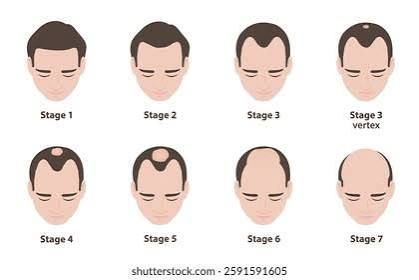
Finasteride is the most clinically established oral medication for male pattern hair loss. Taken at 1mg daily, it works by reducing the hormone responsible for follicle miniaturisation, slowing further loss in the majority of men who use it consistently, and producing measurable regrowth in many. This article covers how it works, what the evidence shows about its effectiveness, the side effect profile, and how finasteride fits alongside other options including hair transplant surgery.
How Does Finasteride Work?
Male pattern baldness is driven by dihydrotestosterone (DHT), a hormone produced when testosterone is converted by an enzyme called 5-alpha reductase. In men who are genetically predisposed to hair loss, DHT binds to receptors in the hair follicle and causes it to gradually miniaturise. The anagen (growth) phase shortens, the telogen (resting) phase extends, and eventually the follicle stops producing visible hair altogether.
That reduction in DHT slows the miniaturisation process. In many patients, follicles that had begun shrinking stabilise, and in a proportion of men, partial reversal occurs. What finasteride cannot do is wake a follicle that has already become permanently dormant. This is why early treatment produces significantly better outcomes than starting after years of established loss.
How Effective Is Finasteride for Hair Loss?
The evidence base is substantial. Over 25 years of controlled trial data makes finasteride one of the best-studied medications in hair restoration.
There are two important caveats. First, finasteride is significantly more effective at the crown and mid-scalp than at the temples and frontal hairline. The hairline tends to be more resistant to DHT modulation. Second, the effect is entirely dependent on continued use. When patients stop taking finasteride, DHT levels return to baseline within weeks, and hair loss resumes at its previous rate, typically within 6 to 12 months of stopping.
Finasteride is not a cure. It is a maintenance medication. Used consistently, it is one of the most reliable tools available for slowing androgenetic alopecia.
Finasteride Dosage
The standard dose for hair loss is 1mg per day, taken orally. This is lower than the 5mg dose used for benign prostatic hyperplasia, and the 1mg formulation is specifically licensed for male pattern baldness in the UK. We stock finasteride 1mg tablets at Denmark Hair Transplant Clinics, available following a consultation with one of our prescribing doctors.
- Timing: Finasteride can be taken at any time of day, with or without food. Consistency matters more than timing.
- Missed doses: Missing a single dose has no meaningful effect. Simply continue the following day. Do not double up.
- Duration: There is no maximum treatment period. Some men take finasteride for 10 to 20 years without adverse effects. If it is working and you are not experiencing side effects, there is no clinical reason to stop.
- When results plateau: Some men find finasteride loses efficacy after several years. If this happens, a more potent 5-alpha reductase inhibitor is sometimes considered as a step up.
Finasteride is not available on the NHS for hair loss. NICE does not fund it for androgenetic alopecia. It is prescribed privately and is widely available through pharmacies and online prescribing services across the UK.
Side Effects of Finasteride: What the Evidence Actually Shows
Sexual side effects are the most commonly reported. Clinical trial data places the incidence of decreased libido at approximately 1.8% of finasteride users versus 1.3% in the placebo group. Erectile dysfunction and ejaculatory changes occur at similarly low rates. For the vast majority of men who do experience these effects, they resolve either with continued use as the body adjusts, or when the medication is stopped.
Mood and psychological effects have been reported and are worth knowing about. Depression and anxiety appear in the prescribing literature, and the MHRA has updated finasteride’s labelling to formally include anxiety as a recognised side effect. The incidence in trial data is less than 1 in 1,000 users. If you notice any change in mood after starting, stop taking it and speak to a prescriber promptly.
Post-Finasteride Syndrome (PFS) is a term used to describe persistent sexual, neurological, or psychological symptoms that continue after stopping the medication. It is not formally recognised as a distinct clinical condition by the MHRA or FDA. The honest position is that persistent side effects appear to be rare, cannot be entirely dismissed, and should be part of any informed conversation before starting treatment. For a full breakdown of the evidence on finasteride side effects, including how topical finasteride compares on this front, see our dedicated guide to finasteride side effects.
Breast changes including tenderness or enlargement occur in less than 1 in 1,000 users. Any unexplained breast change warrants prompt review with a clinician.
The majority of men who take finasteride at 1mg do not experience significant side effects. The decision to start should be made with a registered prescriber who can assess your medical history properly.
Topical vs Oral Finasteride
For men who want the scalp benefits of finasteride but are concerned about systemic effects, topical finasteride is worth considering. Applied directly to the scalp rather than swallowed, topical formulations produce localised DHT suppression while delivering lower levels of the drug into the bloodstream.
Studies comparing topical and oral finasteride show comparable efficacy for hair retention, with lower systemic DHT suppression from the topical route. Sexual side effects appear to be reported less frequently with topical use, though head-to-head trial data remains limited.
Finasteride vs Minoxidil
These are the two most widely used medical treatments for male pattern hair loss, and they work through completely different mechanisms.
| Finasteride | Minoxidil | |
|---|---|---|
| How it works | Reduces DHT production | Increases blood flow to follicles, extends growth phase |
| Form | Oral tablet (also topical) | Topical solution or foam (also oral at low dose) |
| Best for | Crown and mid-scalp | Crown and diffuse thinning |
| Onset | 3 to 6 months | 3 to 4 months |
| Suitable for women | No (oral, men only) | Yes |
| Prescription required | Yes | No (over the counter at 5%) |
Many men use both together. The combination targets hair loss through two distinct pathways, and several specialist clinics now offer combined finasteride and minoxidil formulations as a topical spray. Neither treatment is a permanent solution. Both require ongoing use to maintain results.
Is Dutasteride a Stronger Alternative?
Clinical trials, including a large-scale Korean regulatory trial, found dutasteride 0.5mg superior to finasteride 1mg for hair count at 24 weeks. It is used off-label for hair loss in the UK and prescribed via specialist clinics. It is worth considering for men who have tried finasteride for 12 months or more without adequate response, or who are at a more advanced stage of loss. We cover its full evidence base and side effect profile in our guide to dutasteride for hair loss.
Finasteride Alongside a Hair Transplant
No. You do not need to stop finasteride before surgery. In fact, continuing after a hair transplant is often advisable. The transplanted hair follicles are taken from the donor area at the back and sides of the scalp, where follicles are genetically resistant to DHT and will not be affected by the medication. The concern is the existing native hair in the recipient area. Without ongoing DHT suppression, androgenetic alopecia continues to progress in the surrounding non-transplanted hair, which can undermine the long-term result.
Many patients at Denmark Hair Transplant Clinics use finasteride or topical finasteride alongside their transplant, particularly those who have significant native hair remaining that they want to protect. This is discussed during the pre-operative consultation, where the extent of loss, donor area quality, and the patient’s long-term goals are assessed before any recommendation is made.
Who Should and Should Not Take Finasteride?
Finasteride is appropriate for:
- Adult men with androgenetic alopecia at any stage of loss
- Men who want to slow progression before committing to surgery
- Men who have had a transplant and want to protect remaining native hair
- Men seeing a positive response after 6 to 12 months who want to continue long term
Finasteride is not appropriate for:
- Women who are pregnant or may become pregnant (finasteride is a teratogen and women should not handle crushed tablets)
- Men with a history of hypersensitivity to finasteride or dutasteride
- Men with certain liver conditions, as finasteride is metabolised hepatically
- Men who are currently trying to father a child (finasteride can temporarily reduce sperm quality, though this reverses on stopping)
FAQs
Does finasteride actually regrow hair?
In a proportion of men, yes. Finasteride primarily works by slowing and stopping further loss, but clinical trials show measurable regrowth at the crown in a significant percentage of users, particularly when treatment is started early. It is most effective at preserving existing hair rather than recovering hair that has already been permanently lost.
How long before finasteride shows results?
Most men see early signs of response within 3 to 6 months. Peak improvement typically occurs between 12 and 24 months of consistent daily use. Results before 3 months are uncommon, and absence of visible change at 3 months does not mean the medication is not working.
What happens if I stop taking finasteride?
DHT levels return to baseline within a few weeks of stopping, and the hair loss process resumes. Most men notice increased shedding within 6 to 12 months of discontinuing. The hair preserved during treatment will not be retained indefinitely without continued DHT suppression.
Is finasteride safe to take long term?
The long-term safety data on finasteride at 1mg is extensive. Studies following patients for 10 years or more show that the majority of men tolerate the medication well without new or worsening side effects over time. The decision to continue long term should be reviewed periodically with your prescriber.
Can I take finasteride and minoxidil together?
Yes. The combination is well tolerated and targets hair loss through complementary mechanisms. Finasteride reduces DHT-driven follicle shrinkage, while minoxidil stimulates blood flow and prolongs the growth phase. Many specialist clinics now prescribe them together, including as combined topical formulations.
Does finasteride affect fertility?
Finasteride can temporarily reduce sperm concentration in some men. This effect reverses on stopping the medication. If you are trying to conceive, discuss this with your prescriber before starting or continuing finasteride.
Do I need to stop finasteride before a hair transplant?
No. You can continue taking finasteride before, during, and after a hair transplant. Continuing after surgery is often advisable to protect native hair in the recipient area. This is discussed during your pre-operative consultation at Denmark Hair Transplant Clinics.
Is finasteride available on the NHS?
Not for hair loss. NICE does not fund finasteride for androgenetic alopecia. It is available on private prescription and through regulated online prescribing services. Finasteride is prescribed on the NHS at 5mg for an enlarged prostate.