

Scarring alopecia explained: a UK patient guide

What is scarring alopecia, and how does it differ from other hair loss?

Scarring alopecia, also known as cicatricial alopecia, is a group of disorders in which hair follicles are irreversibly destroyed and replaced by scar tissue, resulting in permanent hair loss. Unlike non-scarring alopecia, where the follicle remains structurally intact and regrowth is possible, scarring alopecia closes off any prospect of natural recovery in the affected area. That distinction is clinically critical and shapes every decision that follows.

The condition is divided into two broad classes. Primary scarring alopecia targets the follicle directly, with inflammation attacking the epithelial stem cells in the hair follicle bulge. Secondary scarring alopecia arises when follicle destruction is a consequence of another process altogether, such as burns, radiation, or severe infection. Within the primary class, subtypes are grouped by the dominant inflammatory cell type: lymphocytic, neutrophilic, or mixed. The two most common forms are lichen planopilaris (LPP) and frontal fibrosing alopecia (FFA), both of which predominantly affect women.

Key points at a glance:

  • Follicle destruction is permanent; lost follicles cannot be regenerated by any current treatment.
  • Primary cicatricial alopecia is classified as lymphocytic, neutrophilic, or mixed.
  • LPP and FFA are the most prevalent types in the UK.
  • Non-scarring alopecia (e.g., alopecia areata, telogen effluvium) leaves follicles intact and carries potential for regrowth.
  • The Primary Care Dermatology Society (PCDS) classifies scarring alopecia as irreversible, making early referral a priority.


Table of Contents

How is scarring alopecia diagnosed in the UK?

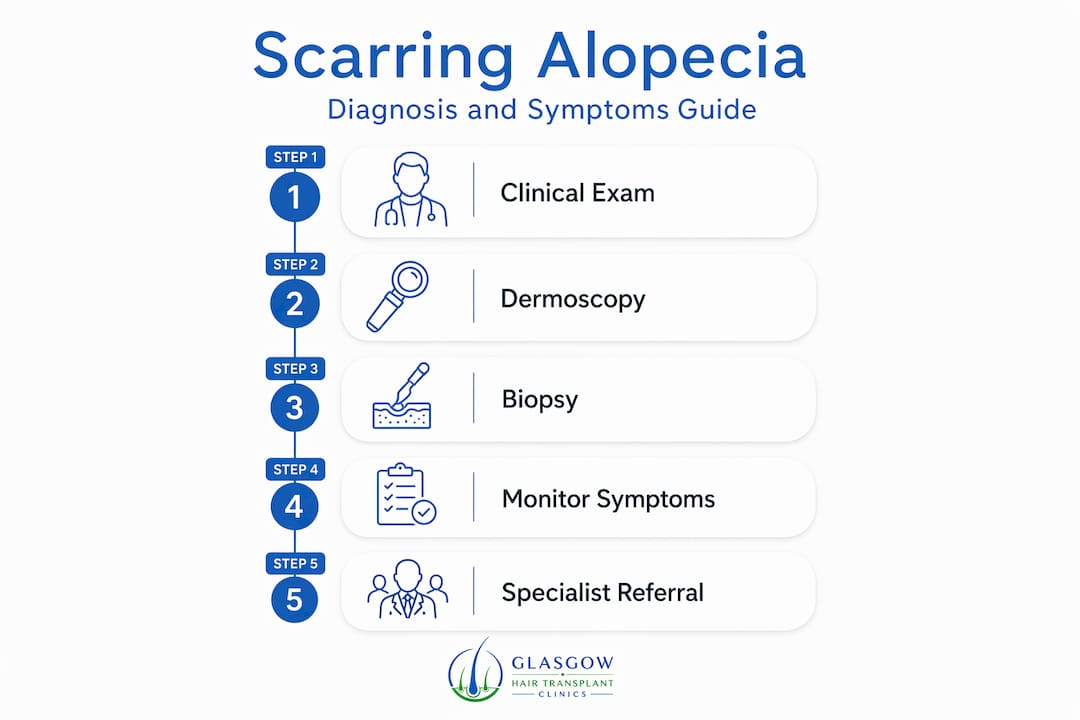
Distinguishing scarring from non-scarring alopecia is the single most important step in clinical assessment, because the management pathway diverges entirely at that point. A clinician examining the scalp will look for the loss of follicular ostia (the small openings through which hairs emerge), a shiny or atrophic surface, and any perifollicular inflammation or pigmentary change. These signs point strongly toward a scarring process.

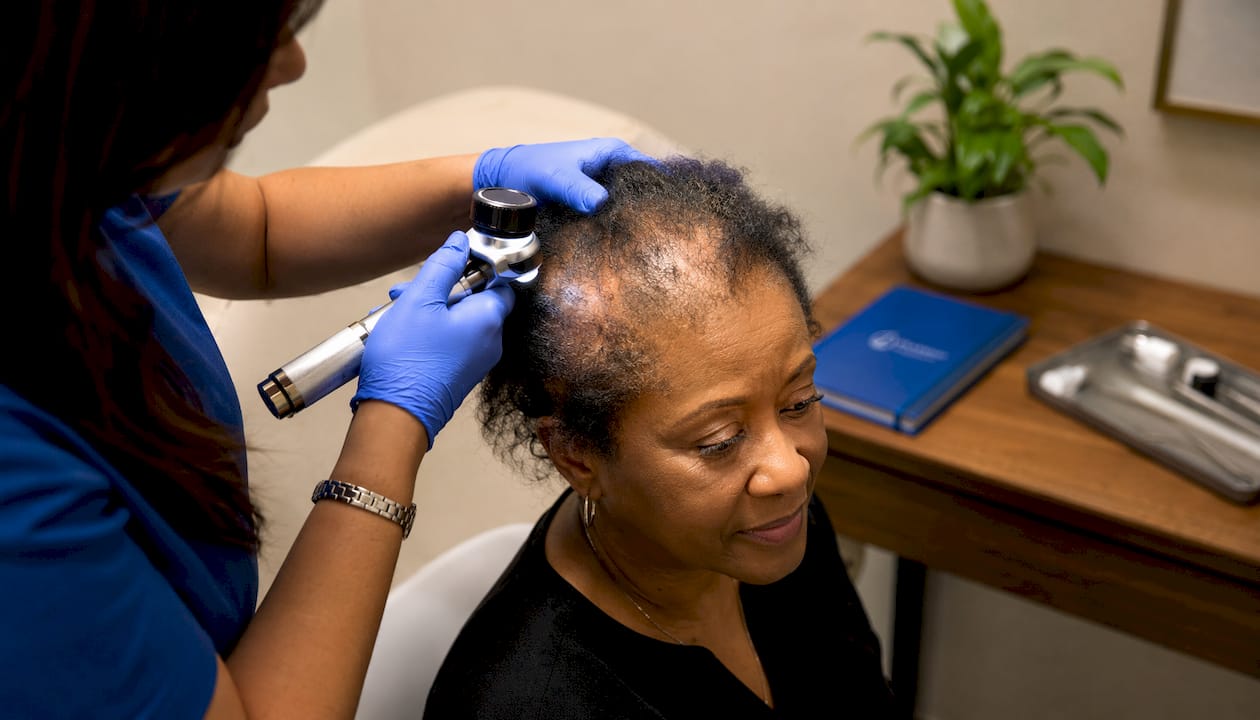
Dermoscopy has become an indispensable tool at this stage. It can reveal the absence of follicular openings, atrophic skin, and tufting patterns such as “dolls hair” tufting, where multiple hairs emerge from a single follicular unit as surrounding follicles are destroyed. Dermoscopic findings guide the urgency of onward referral and help clinicians at EIV Diagnostics and similar dermatopathology services prepare for targeted biopsy analysis.

A scalp biopsy remains the gold standard for confirming the diagnosis and identifying the specific subtype. Patients with suspected scarring alopecia in the UK require urgent dermatology referral to minimise further permanent loss. In primary care, a blood screen is typically arranged before that referral.

Diagnostic steps summarised:

  • Clinical examination for loss of follicular ostia, shiny or atrophic scalp, and perifollicular inflammation.
  • Dermoscopy to detect tufting, absent follicular openings, and skin texture changes.
  • Scalp biopsy for definitive subtype confirmation.
  • Blood tests in primary care: FBC, U&E, LFT, ferritin, TFT, and ANA.
  • Urgent dermatology referral once scarring alopecia is suspected.


What symptoms should you look out for?

Symptoms of scarring alopecia vary considerably between patients and between subtypes. Some people experience significant discomfort; others notice nothing beyond progressive hair loss. That variability makes the condition easy to underestimate.

Common symptoms include:

  • Itching, burning, pain, or altered sensation on the scalp.
  • Patchy or diffuse hair loss, often with a shiny, smooth surface where hair has been lost.
  • Perifollicular scaling or redness in active phases.
  • Tufting of hairs in affected areas.

Crucially, inflammation may be entirely subclinical, meaning the disease can be actively destroying follicles beneath the skin surface with no visible redness or swelling. Patients who feel no symptoms should not assume their condition is stable. FFA, for example, is asymptomatic in the majority of cases, with only around a quarter of patients reporting itching or pain in the affected hairline area. Regular clinical monitoring is the only reliable way to assess activity.


What treatment options are available for scarring alopecia in the UK?

The goal of treatment is unambiguous: stop further follicle destruction. No current therapy can restore follicles that have already been lost. Early intervention therefore carries far more weight than it does in non-scarring conditions, where a delayed start still leaves regrowth possible.

Medical management draws on several drug classes, each targeting the inflammatory process through a different mechanism:

  • Topical and intralesional corticosteroids: First-line agents applied directly to active areas to suppress localised inflammation.
  • Calcineurin inhibitors (e.g., tacrolimus): Used where steroids are not tolerated or as adjuncts.
  • Tetracycline antibiotics (e.g., doxycycline): Prescribed for their anti-inflammatory properties rather than antimicrobial action, typically for six months before response is assessed.
  • Oral hydroxychloroquine: Commonly used in lymphocytic subtypes such as LPP and FFA; trialled over 4–6 months with monitoring including annual eye examinations for retinal toxicity.
  • Immunosuppressants (e.g., ciclosporin, methotrexate): Reserved for refractory cases; require close monitoring with regular blood tests.

For patients exploring hair loss medication options alongside specialist care, understanding which drug class applies to their specific subtype is an important first conversation with their dermatologist.


How should you manage scarring alopecia over the long term?

Scarring alopecia is a chronic condition. Achieving disease stability is not a one-time event; it requires sustained monitoring and, for many patients, ongoing treatment adjustments over years. Patients should expect regular clinic visits, periodic blood tests, and surveillance for medication side effects.

Hydroxychloroquine in particular carries a risk of retinal toxicity with long-term use, making annual eye examinations non-negotiable. Immunosuppressants require blood monitoring to detect hepatic or haematological changes before they become clinically significant.

Beyond pharmacological management, the psychosocial burden of permanent hair loss is real and should be addressed directly. Referral to psychological support services or counselling is appropriate for many patients. Optimising diet, maintaining micronutrients within reference range, and adopting a gentle scalp care routine all contribute to the overall management plan. Organisations such as Alopecia UK provide peer support and guidance on cosmetic camouflage options that can be just as meaningful as active treatment for day-to-day wellbeing.

Long-term monitoring checklist:

  • Regular dermatology follow-up to assess disease activity.
  • Annual eye examinations for patients on hydroxychloroquine.
  • Periodic blood tests for patients on immunosuppressants.
  • Psychological support referral where appropriate.
  • Dietary optimisation, aiming for micronutrients at mid-reference range or above.


What hair restoration options are available once the condition is stable?

Hair restoration after scarring alopecia is possible, but the timing and approach require careful clinical judgement. Hair transplant surgery is generally deferred until the inflammatory process has been well-controlled for an extended period, typically several years. Proceeding during active disease carries a high risk of graft failure and potential exacerbation of the underlying condition.

When disease inactivity is confirmed, surgical restoration becomes a realistic option for suitable patients. The procedure involves transplanting follicular units from a healthy donor area into the scarred region, a technically demanding process given the altered tissue environment. Patients with conditions such as CCCA should also be aware of an elevated risk of keloid scar formation.

While awaiting surgical eligibility, or for those who prefer non-surgical routes, several options provide meaningful cosmetic benefit:

  • Scalp micropigmentation (SMP): A non-surgical technique that replicates the appearance of hair follicles using specialised pigment, creating the look of a closely cropped scalp.
  • Wigs and hairpieces: High-quality options that can be prescribed through NHS dermatology services in cases of significant psychological distress.
  • Cosmetic camouflage products: Fibres, sprays, and concealers that reduce the visual contrast between hair and scalp.

Glasgowhairtransplantclinics offers a full range of hair restoration services across the UK, with GMC-registered surgeons and CQC-registered clinics. Whether you are exploring hairline transplant options or scalp micropigmentation, the team provides personalised consultations to assess your suitability and set realistic expectations. A free online or face-to-face consultation is available to help you understand your options before committing to any procedure.

Pro Tip: If you have been diagnosed with a scarring alopecia subtype, ask your dermatologist for a written record of disease activity at each visit. This documentation becomes essential when assessing surgical eligibility later.


Key takeaways

Scarring alopecia requires early diagnosis and sustained treatment to halt follicle destruction, as lost follicles cannot be restored by any current medical or surgical intervention.

Point Details
Permanent follicle loss Destroyed follicles cannot regenerate; the treatment goal is to stop further loss, not reverse it.
Urgent referral matters UK patients with suspected scarring alopecia need urgent dermatology referral to minimise irreversible damage.
Subclinical inflammation Absence of visible redness does not confirm disease inactivity; monitoring remains necessary.
Treatment timelines Hydroxychloroquine is trialled over 4–6 months; tetracycline antibiotics are typically assessed after six months.
Surgery requires stability Hair transplant surgery is deferred until inflammation has been inactive for several years to reduce graft failure risk.

FAQ

What is the difference between scarring and non-scarring alopecia?

Scarring alopecia permanently destroys hair follicles and replaces them with scar tissue, making hair loss irreversible. Non-scarring alopecia leaves follicles intact, so regrowth remains possible with appropriate treatment.

Can scarring alopecia be cured?

There is currently no cure for scarring alopecia. Treatment focuses on halting disease progression and preserving remaining hair through anti-inflammatory therapies.

How is scarring alopecia diagnosed?

Diagnosis involves clinical examination, dermoscopy to detect absent follicular openings and tufting patterns, a scalp biopsy for subtype confirmation, and blood tests including FBC, ferritin, TFT, and ANA.

Is a hair transplant possible if you have scarring alopecia?

A hair transplant may be considered once the inflammatory process has been well-controlled for several years, but it carries a higher risk of failure than standard transplantation and requires thorough specialist assessment beforehand.

What types of scarring alopecia are most common in the UK?

Lichen planopilaris (LPP) and frontal fibrosing alopecia (FFA) are the two most prevalent types, both classified as lymphocytic primary cicatricial alopecias and most commonly affecting women.

Recommended

Scarring alopecia explained: a Denmark patient guide

Scarring hair loss needs timely medical assessment because damaged follicles may be permanently lost. Treatment focuses on the cause, disease activity and protecting remaining hair before restoration is considered.

Clinician examining a patient’s scalp and hair
Published
27 July 2026
Updated
13 September 2026

What makes scarring hair loss different?

Scarring alopecia describes conditions in which follicles are damaged and replaced by scar tissue. Hair cannot normally regrow from a follicle that has been destroyed. The priority is to identify the cause and limit further damage, rather than promise that a growth product will restore the lost area.

This differs from non-scarring conditions, where follicles remain and regrowth may be possible. The Primary Care Dermatology Society overview explains why early distinction matters.

Different causes need different care

Examples include lichen planopilaris, frontal fibrosing alopecia and other inflammatory scalp diseases. Scarring can also follow injury, burns or severe infection. These are not one diagnosis with one standard treatment.

Frontal fibrosing alopecia can cause recession in a band at the front of the scalp and may involve the eyebrows. Lichen planopilaris may produce patchy loss with inflammation around remaining hairs. A specialist assessment is needed to establish the specific condition.

Symptoms that deserve attention

New or progressive loss with pain, burning, itch, redness, scale, pustules or a smooth shiny area should be reviewed by a doctor. Some people have little discomfort, so absence of pain does not establish that a diagnosed condition is inactive.

Record the timing, affected areas and any changes in eyebrows or body hair. Bring photographs and a list of medicines, supplements and scalp products. Do not wait for a cosmetic appointment if active inflammatory loss is suspected.

How the diagnosis is assessed

A clinician examines the scalp and pattern of loss, sometimes using magnification to look at the hair and follicle openings. A scalp biopsy may be needed to establish the subtype or clarify an uncertain diagnosis. Blood tests are chosen for the clinical question; a fixed panel is not necessary for everyone.

Ask what the current findings suggest, whether specialist dermatology review is needed and how quickly it should happen. You should also understand what to do if the area expands or symptoms worsen before the next appointment.

Treatment aims and monitoring

Treatment may aim to reduce inflammation, control symptoms and protect remaining hair. Depending on the diagnosis, a dermatologist may consider topical medicines, injections or tablets. Response varies and the plan may need adjustment over time.

Each medicine has its own precautions. If hydroxychloroquine, an immunosuppressant or another monitored treatment is proposed, ask about the tests or eye screening required for your circumstances, the schedule, interactions and symptoms to report. A general blog should not replace the prescriber's monitoring plan.

Pregnancy plans, other health conditions and existing medicines may affect the choice. Do not stop prescribed treatment or substitute a hair-growth product without speaking with the clinician responsible for your care.

Living with permanent loss

Wigs, hairpieces and camouflage may help with appearance, and emotional support can be part of treatment. Choose products and attachment methods that are comfortable for your scalp. A normal balanced diet supports health, but there is no universal vitamin level or special diet that cures scarring alopecia.

Ask your dermatologist before procedures that penetrate or irritate affected skin, including micropigmentation. Cosmetic options should fit the condition and its activity.

Can transplantation ever be considered?

Selected patients with a condition that has remained inactive may be considered for restoration after specialist review. Surgery does not cure the underlying disease, and recurrence can affect a treated area. Graft growth in scarred tissue may be less predictable, and donor supply still needs assessment.

There is no guaranteed waiting period that makes every case suitable. Bring the diagnosis, treatment history and records of disease activity to any restoration consultation. Denmark Hair Transplant Clinics can discuss an assessment, but medical control and specialist judgement come before a surgical plan or individual DKK quotation.
Discuss assessment after specialist review

Contact Denmark Hair Transplant Clinics about restoration questions, with your diagnosis and treatment history available.

Request a consultation


Man checking his receding hairline in a mirror
By Dr Harpreet Kalra September 14, 2026
Understand hair loss studies and treatment statistics with source populations, study dates and practical context for readers in Denmark.
A grey scoop filled with white creatine monohydrate powder
By Dr Harpreet Kalra September 7, 2026
Does creatine cause hair loss? Read what the 2009 study and 2025 trial found, their limits, and what to do if your hair is thinning.
Hair transplant graft-zone diagram showing estimated graft counts for the hairline, mid-scalp and crown areas.
By Dr Harpreet Kalra September 4, 2026
Typical graft ranges for the hairline, crown and advanced loss, with donor density, coverage and long-term planning explained clearly.
Show More