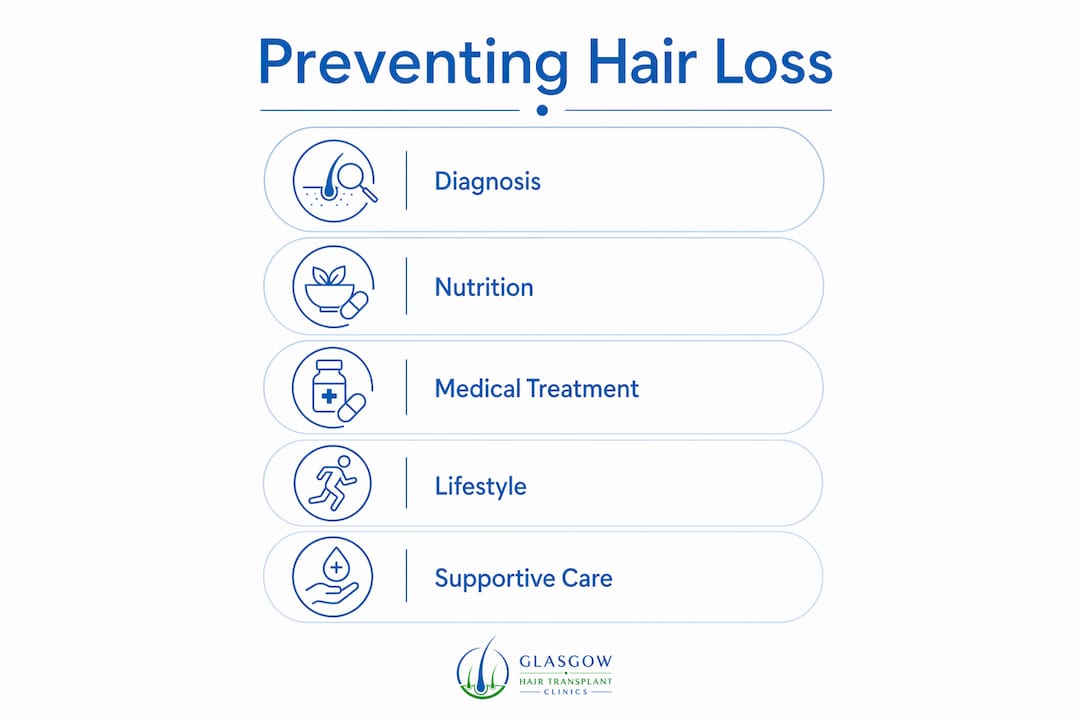
How to prevent further hair loss thinning
Hair thinning, known clinically as alopecia, is defined as the progressive reduction in hair density caused by follicle miniaturisation, systemic imbalance, or scalp inflammation. The goal of prevention is not simply to stop shedding but to identify and address the specific cause before irreversible follicle damage occurs. Whether you are noticing a widening parting, a thinning crown, or general diffuse shedding, the strategies to prevent further hair loss thinning are most effective when they are personalised, evidence-based, and started early. This guide draws on NHS, NICE CKS, and PCDS clinical guidance to give you a clear, practical path forward.
Why getting the right diagnosis is the first step to stop hair thinning
Hair loss arises from multiple causes, including male and female pattern hair loss, inflammatory scalp conditions, and systemic triggers. That variety is precisely why generic shampoos and supplements so often fail. A treatment that works for androgenetic alopecia will not slow a scarring alopecia, and applying minoxidil to a scalp inflamed by lichen planopilaris can delay the correct diagnosis by months.
Your first step is a clinical assessment, ideally with your GP and, where needed, a referral to a dermatologist. A thorough history, blood tests, and sometimes a scalp biopsy will identify whether your thinning is hormonal, nutritional, inflammatory, or autoimmune. Early diagnosis and treatment
significantly improves the chances of stabilising hair density before follicles are permanently lost.
Common causes your clinician will assess include:
- Male and female pattern hair loss
(androgenetic alopecia): the most common cause, driven by dihydrotestosterone (DHT) sensitivity in genetically predisposed follicles.
- Inflammatory and scarring alopecias
: conditions such as lichen planopilaris and frontal fibrosing alopecia, which destroy follicles if untreated.
- Telogen effluvium
: diffuse shedding triggered by physical or emotional stress, illness, or surgery, usually temporary.
- Autoimmune conditions
: including alopecia areata, where the immune system attacks follicles.
- Systemic causes
: thyroid disorders, iron deficiency anaemia, and nutritional deficiencies.
Pro Tip:
Before your GP appointment, photograph your hairline and parting in consistent lighting every two weeks for a month. This visual record helps clinicians assess the rate and pattern of loss far more accurately than a single consultation.
Lifestyle and systemic factors that reduce hair loss
Systemic health has a direct impact on hair density. Diffuse hair loss is frequently caused
by crash dieting, zinc deficiency, iron deficiency anaemia, and thyroid disorders. These are not cosmetic problems. They are medical ones, and addressing them is often the most effective thinning hair solution available.
Nutrition and diet
Iron deficiency is one of the most common and most overlooked drivers of diffuse shedding in women. Ferritin levels below the optimal range suppress the hair growth cycle even when haemoglobin remains normal. Zinc deficiency produces a similar effect. A blood panel that includes ferritin, full blood count, thyroid function, and vitamin D gives your clinician the information needed to correct deficiencies before escalating to topical or oral treatments.
Crash dieting is equally damaging. Severe caloric restriction triggers telogen effluvium, pushing follicles prematurely into the resting phase. The shedding typically appears two to three months after the dietary restriction, which is why many people fail to connect the two events.
Stress, smoking, and scalp care
Chronic psychological stress elevates cortisol, which disrupts the hair growth cycle. Smoking reduces blood flow to the scalp, depriving follicles of oxygen and nutrients. Both are modifiable risk factors. Scalp care matters too: tight hairstyles such as high ponytails and braids cause traction alopecia, a mechanical form of hair loss that is entirely preventable.
Practical lifestyle adjustments to support hair preservation include:
- Eat adequate protein (hair is primarily keratin, a protein) and correct any nutritional deficiencies identified by blood tests.
- Manage thyroid conditions and other chronic illnesses with your GP, as uncontrolled systemic disease accelerates shedding.
- Avoid tight hairstyles and heat styling tools above 180°C on fine or thinning hair.
- Reduce smoking or stop entirely to improve scalp microcirculation.
- Practise stress management through regular physical activity, adequate sleep, and, where needed, psychological support.
Pro Tip:
Ask your GP specifically for a ferritin test rather than a standard iron test. Ferritin is the stored form of iron and is the more sensitive marker for hair loss risk. Many standard blood panels omit it.
What medical treatments are available to prevent further hair loss thinning?
Evidence-based medical treatments exist for several types of hair loss, and topical minoxidil and oral finasteride
are the primary NHS-recommended options for slowing male pattern hair loss progression. Both have specific dosing guidelines, eligibility criteria, and monitoring requirements that make professional supervision non-negotiable.
Topical minoxidil
Minoxidil is a vasodilator applied directly to the scalp. It prolongs the anagen (growth) phase of the hair cycle and increases follicle size. For men, the standard concentration is 5% applied twice daily. For women, 2% or 5% formulations are used depending on clinical assessment. Results require consistent use for at least four to six months before meaningful density changes are visible. Stopping treatment reverses any gains within months, so this is a long-term commitment.
Oral medications: finasteride and dutasteride
Finasteride and dutasteride block the conversion of testosterone to DHT, the hormone responsible for follicle miniaturisation in androgenetic alopecia. Both are effective for male pattern hair loss. However, finasteride and dutasteride carry documented risks
of sexual dysfunction and mood changes, including depression and anxiety. The MHRA mandates that prescribers provide detailed informed consent and monitor patients for these side effects throughout treatment.
“Patients prescribed finasteride or dutasteride must receive clear information about the risk of sexual dysfunction and psychiatric side effects. Monitoring for these effects should be integrated into every follow-up appointment, not treated as an afterthought.” — MHRA Drug Safety Update
Finasteride is not licensed for use in women of childbearing age due to the risk of foetal harm. Female patients should discuss alternatives such as topical minoxidil or anti-androgen therapies with a dermatologist.
Chemotherapy-related hair loss
Hair loss from cancer treatment
is generally temporary. Prevention in this context focuses on minimising follicle damage during treatment and supporting regrowth afterwards, rather than long-term pharmacological intervention. Scalp cooling during chemotherapy infusions is the primary clinical tool used to reduce drug exposure to scalp follicles.
Key points on medical treatment eligibility:
- Minoxidil is available over the counter but should be used under clinical guidance to confirm the diagnosis first.
- Finasteride requires a prescription and is contraindicated in women of childbearing potential.
- Female pattern hair loss is chronic and progressive; early treatment and realistic expectation-setting are both part of effective management.
- All medical treatments require monitoring and should be reviewed regularly by a qualified clinician.
Supportive treatments and when to consider hair transplantation
When medical treatments are insufficient or hair loss has already progressed significantly, additional options exist. These range from non-surgical therapies to surgical restoration, and the right choice depends on the type and extent of loss.
Non-surgical supportive options
| Treatment |
Best suited for |
Key consideration |
| Low-level laser therapy (LLLT) |
Androgenetic alopecia, early thinning |
Requires consistent use; evidence is moderate |
| Platelet-rich plasma (PRP) therapy |
Pattern hair loss, post-transplant support |
Multiple sessions needed; results vary |
| Corticosteroid injections |
Alopecia areata, inflammatory alopecias |
Effective for targeted patches; not for diffuse loss |
| Wigs and hairpieces |
Any type of hair loss |
Immediate cosmetic result; no medical intervention needed |
| Scalp micropigmentation (SMP) |
Advanced thinning, scarring alopecia |
Cosmetic camouflage; does not restore follicles |
Managing inflammation with corticosteroids or targeted therapies can slow progression in scarring alopecias, where urgent intervention protects remaining follicles. Delay in these cases causes permanent loss.
Hair transplantation
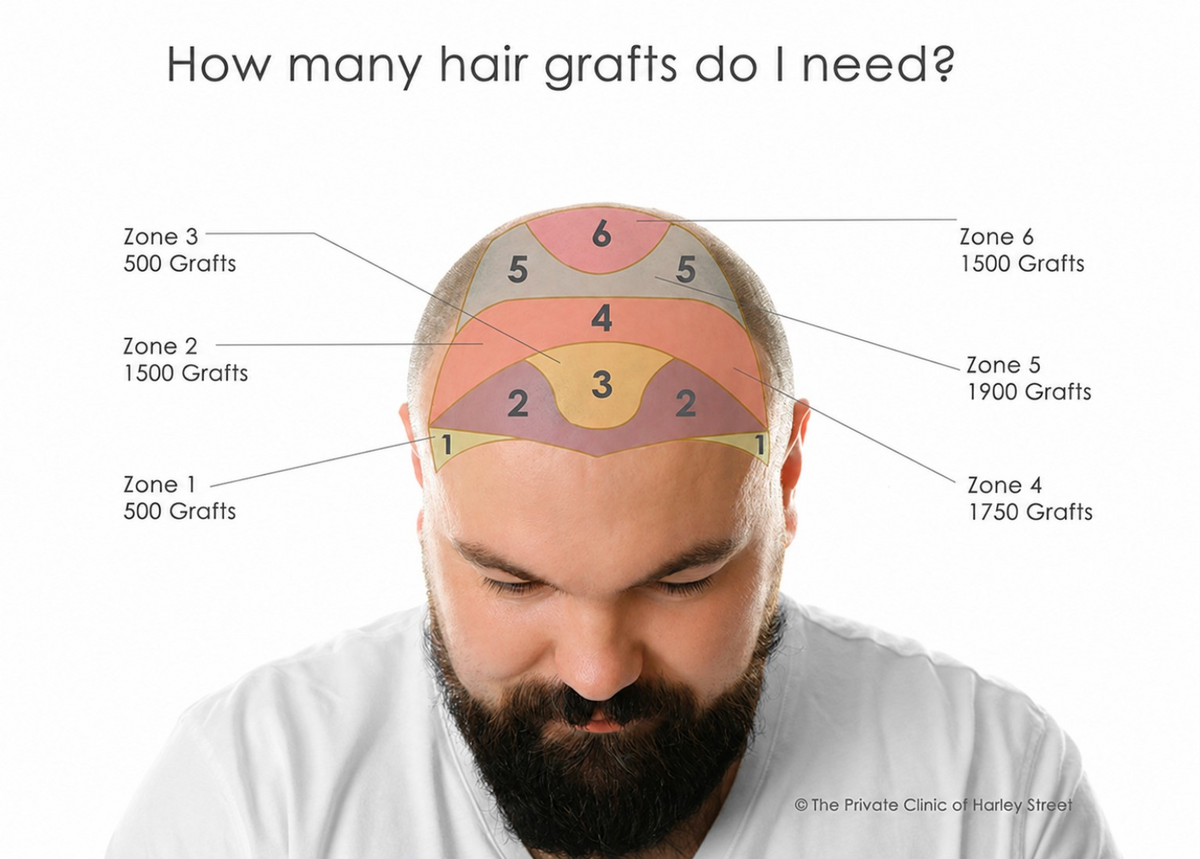
Hair transplantation, including Follicular Unit Extraction (FUE), is considered when hair loss has stabilised and sufficient donor hair remains. It is a restoration procedure, not a prevention one. Transplanted follicles are taken from DHT-resistant areas of the scalp, typically the back and sides, and placed in thinning or bald zones. The results are permanent, but the underlying condition continues to progress in non-transplanted areas without ongoing medical management.
Psychological and emotional support is an equally valid part of the treatment plan. Wigs, counselling, and cosmetic approaches improve quality of life during hair loss management and should never be dismissed as secondary concerns. The psychological impact of hair loss
is well documented, and addressing it is part of comprehensive care.
For those considering surgical options, reviewing hair loss treatment options
across the full spectrum helps set realistic expectations before committing to any procedure.
Key takeaways
Preventing further hair thinning requires accurate diagnosis first, followed by targeted medical, lifestyle, and supportive interventions tailored to the specific cause.
| Point |
Details |
| Diagnosis before treatment |
Identify the specific cause of hair loss before starting any treatment to avoid wasting time on ineffective approaches. |
| Address systemic causes early |
Correct iron, zinc, and thyroid imbalances through blood testing before escalating to topical or oral medications. |
| Medical treatments need monitoring |
Minoxidil, finasteride, and dutasteride all require clinical supervision due to side effects and eligibility criteria. |
| Start treatment early |
Early intervention prevents irreversible follicle miniaturisation and gives medical treatments the best chance of working. |
| Psychological support matters |
Wigs, counselling, and cosmetic options are legitimate parts of a complete hair loss management plan. |
What I have learned from years of seeing patients delay treatment
The most consistent pattern I observe is this: people wait. They notice thinning, try a supermarket shampoo for six months, then try a supplement they saw advertised online, and arrive at a clinic two years later with significantly less to work with. The biology of hair loss does not pause while you experiment.
The second pattern is equally frustrating. People who do seek help often receive a prescription for minoxidil without any investigation into why they are losing hair. Minoxidil applied to a scalp with untreated iron deficiency or undiagnosed lichen planopilaris is not prevention. It is noise. The underlying cause continues unchecked.
What actually works is the combination of early, accurate diagnosis and a treatment plan that addresses the root cause, not just the symptom. If you are in your twenties or thirties and noticing thinning, that is the optimal window. The follicles are still alive. The miniaturisation is still reversible. Waiting until the thinning is obvious to others means waiting until the window has narrowed considerably.
The side-effect conversation around finasteride and dutasteride also deserves more honesty than it typically receives. These are effective drugs. They are also drugs with real, documented psychiatric and sexual side effects that the MHRA takes seriously enough to mandate updated safety warnings. Any clinician prescribing them without a structured monitoring plan is not providing adequate care. Ask for that plan before you accept a prescription.
Glasgowhairtransplantclinics: professional assessment and treatment in one place
Glasgowhairtransplantclinics offers a structured approach to hair loss that begins with a thorough assessment, not a generic product recommendation. The clinics are CQC registered, HIS registered, and all surgeons are on the GMC register, giving you the clinical oversight that effective prevention requires.
Whether you are exploring non-surgical options such as PRP therapy
or considering whether a hairline transplant
is appropriate for your level of loss, the team at Glasgowhairtransplantclinics will assess your specific pattern and recommend a plan grounded in clinical evidence. Free consultations are available online and in person across UK locations including Glasgow and Newcastle. The earlier you seek assessment, the more options remain available to you.
FAQ
What is the most effective way to prevent hair thinning?
The most effective approach is accurate diagnosis followed by targeted treatment. Addressing systemic causes such as iron deficiency or thyroid disorders, combined with evidence-based treatments like topical minoxidil, gives the best results when started early.
Can lifestyle changes alone stop hair thinning?
Lifestyle changes can slow or reverse thinning caused by nutritional deficiencies, stress, or crash dieting. For androgenetic alopecia or inflammatory conditions, medical treatment is also required alongside lifestyle adjustments.
Is finasteride safe for long-term use?
Finasteride is effective for long-term use in eligible patients, but the MHRA requires prescribers to monitor for sexual dysfunction and psychiatric side effects throughout treatment. Informed consent and regular review are mandatory.
How early should I seek help for thinning hair?
NICE CKS advises that early treatment significantly improves outcomes by preventing irreversible follicle miniaturisation. Seeking assessment at the first sign of thinning, rather than waiting for visible baldness, gives treatments the best chance of working.
When is a hair transplant the right option?
A hair transplant is appropriate when hair loss has stabilised, sufficient donor hair exists, and medical treatments have been optimised. It restores density in thinning areas but does not stop ongoing loss in untreated zones without continued medical management.
Recommended
Find out what is causing the change
Preventing further thinning starts with distinguishing gradual pattern hair loss from shedding, breakage and scalp disease. These can overlap, and a product intended for one condition may not help another. A doctor can review the timing, distribution, medical history and scalp before deciding whether tests or specialist assessment are needed.
Seek medical advice for sudden or patchy loss, pain, redness, scaling, a shiny area of scalp or loss involving the eyebrows. Do not assume those changes are simply a normal stage of inherited thinning. The NHS overview
explains common causes and when to seek advice.
Reduce avoidable pulling and breakage
Loosen styles that pull on the scalp, especially if they cause discomfort or small bumps around the hairline. Repeated tension can cause traction alopecia, and long-standing damage may become permanent. Gentle handling and reducing repeated harsh heat or chemical processing can also help limit shaft breakage, although this does not reverse inherited pattern loss.
Keep a comfortable scalp-care routine and ask a pharmacist or doctor about persistent itch or flaking. Aggressive scrubbing and applying several active products at once may irritate the scalp. There is no universal shampoo or temperature setting that prevents every type of hair loss. Read the British Association of Dermatologists guidance on traction alopecia.
Address health changes without assuming a deficiency
Major illness, significant weight loss, childbirth or a stressful event can be followed by diffuse shedding. The delay between a trigger and the shed can make the connection difficult to spot. Record recent changes and share them at your appointment.
A varied diet and avoiding crash diets support general health. If iron deficiency, thyroid disease or another medical problem is suspected, testing should be chosen for your circumstances. There is no agreed ferritin target that everyone must reach for hair growth. Do not take iron or high-dose supplements solely on the basis of an online hair-loss claim. The Danish patient guide for women
distinguishes deficiency treatment from supplements taken without a demonstrated deficiency.
Review a suspected medicine-related change with the prescriber. Do not stop essential treatment yourself. If hair loss follows cancer treatment, ask the oncology team about appropriate prevention or support for your particular regimen.
Consider medicines only for a suitable diagnosis
Topical minoxidil and prescription finasteride can help some people with pattern hair loss, but neither guarantees that all thinning will stop. Benefits generally require continued use. Product directions, age limits, pregnancy precautions and adverse effects must be discussed with a pharmacist or prescriber using current Danish information.
Finasteride needs a discussion of mood and sexual side effects, including what symptoms require prompt medical advice. Dutasteride and oral minoxidil should not be presented as routine interchangeable alternatives; ask about off-label use and the assessment and monitoring involved. The medication guide
explains questions to bring to a prescribing appointment.
Track change in a useful way
Photographs taken about monthly with similar lighting, hairstyle and angles are more useful than repeatedly counting hairs each day. Note treatment start dates and any symptoms. Agree when progress should be reviewed and what would count as a worthwhile benefit.
Report side effects when they occur rather than waiting for a scheduled photo review. A treatment plan can be adjusted, and choosing monitoring or cosmetic support is also a valid option. Hair loss can affect wellbeing; ask for support if worry is becoming hard to manage.
A transplant does not prevent future natural hair loss
Surgery moves donor follicles into selected areas. It does not stop the underlying tendency of surrounding natural hair to thin. A plan should account for limited donor supply, likely future loss and the possibility that surgery is not appropriate at present.
Ask how any proposed procedure fits with longer-term monitoring or medical treatment. Denmark Hair Transplant Clinics provides individual written quotations in Danish kroner following assessment. You can explore the hair loss advice hub
before deciding which questions to discuss.
About Dr Harpreet Kalra
Dr Harpreet Kalra
was born in Norway. His hair-restoration consultations consider the cause of hair loss, donor supply and the longer-term plan. UK GMC reference 7126076.
Make a plan for changing hair
Contact Denmark Hair Transplant Clinics to discuss assessment and longer-term planning.
Request a consultation