Hair transplant follow-up care: a patient guide
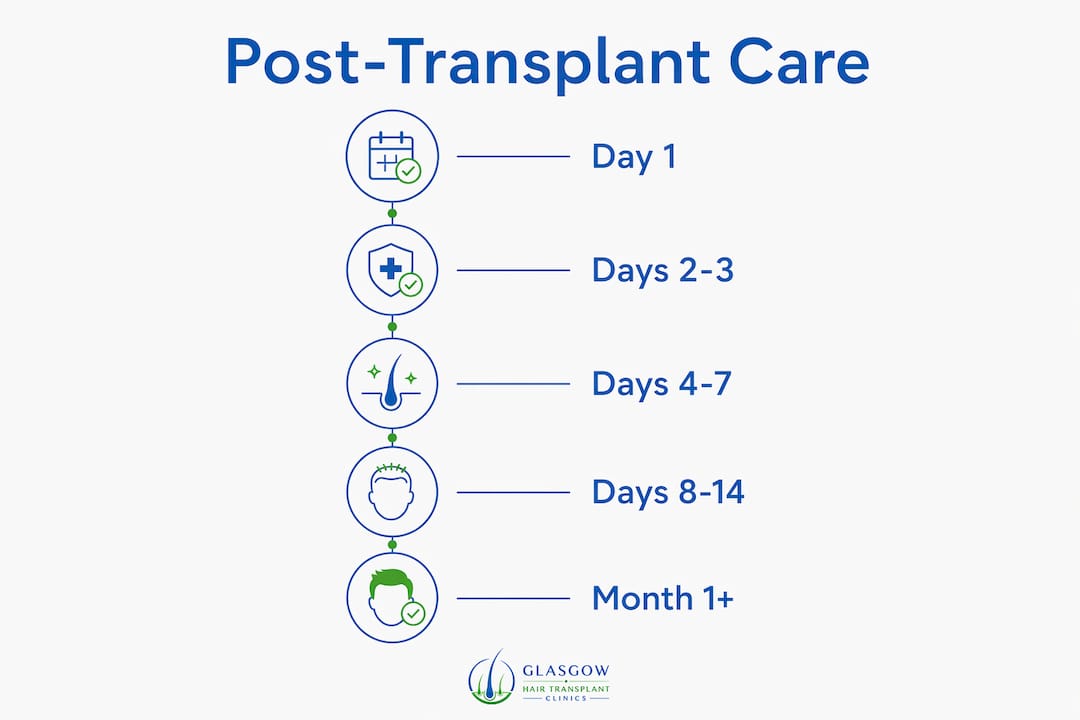
Protecting your newly transplanted grafts is the single most important thing you can do after surgery. For the first 14 days, avoid any pressure on the scalp, do not sweat, and resist the urge to touch or scratch the treated area. According to BAHRS professional standards, the initial two weeks represent the most critical graft sensitivity period within a prolonged recovery cycle that can last over a year. Hair transplant follow-up care covers every step from the moment you leave the clinic to your final aesthetic review.
Keep your clinic’s out-of-hours number saved in your phone before you leave on the day of surgery. If you cannot reach the clinic and experience severe bleeding, spreading redness, or a high fever, attend A&E or call 999. For general wound care guidance, the NHS hair transplant page
is a reliable first reference.
Do on day one:
keep your head elevated, wear loose front-fastening clothing, arrange a driver home, and take any prescribed pain relief as directed. Do not
touch the grafts, bend forward sharply, drink alcohol, or expose the scalp to direct sun. Clinics registered with the Care Quality Commission (CQC), whose surgeons appear on the General Medical Council (GMC) register, and who hold membership of the British Association of Hair Restoration Surgery (BAHRS) are required to provide a written aftercare plan and an emergency contact number. Glasgowhairtransplantclinics meets all three of these standards.
Table of Contents
What should you do in the first 48–72 hours?
The first three days are about protection and swelling management. Your clinic will apply a dressing to the donor area; this is typically removed within 2–5 days, as outlined in NHS guidance. Do not attempt to remove it yourself earlier than instructed.
Sleep with your head elevated at 15°–30° for the first week. This position reduces forehead and scalp swelling and keeps pressure off the recipient area. A travel pillow placed around the neck works well for keeping the head stable overnight without rolling onto the grafts.
Arrange a driver or taxi for the journey home. Public transport is not ideal on the day of surgery, not because of infection risk, but because crowded spaces increase the chance of accidental contact with the scalp. Wear a loose, button-up or zip-up top so you never have to pull clothing over your head.
Pro Tip:
Pack a loose-fitting cap or the post-op headband your clinic provides before surgery day. Wearing it on the journey home protects the recipient area from draughts and accidental bumps without pressing on the grafts.
How do you care for your grafts in the first 14 days?
The NHS aftercare guidance advises beginning gentle washing from around day 6, though some clinics start a diluted saline spray routine from day 2 or 3. Follow your written aftercare plan precisely, as protocols vary by technique (FUE versus FUT) and clinic.
Step-by-step wash routine (days 6–14)
- Fill a clean cup with lukewarm water. Hot water increases blood flow and risks dislodging fragile grafts.
- Apply a small amount of the mild, sulphate-free shampoo your clinic recommends. Never use your usual shampoo in the first two weeks.
- Pour the water gently over the scalp. Do not use a shower head at full pressure directly on the recipient area.
- Use your fingertips in a soft patting motion. No rubbing, no circular scrubbing.
- Rinse with another cup of lukewarm water poured carefully over the scalp.
- Pat dry with a clean, soft towel. Never rub.
Pro Tip:
If you are unsure whether a scab is ready to come away, leave it alone. Scabs typically form in the first few days and shed naturally by days 10–14. Picking them early risks removing a graft with them.
Activities to avoid in the first 14 days
According to CPSA hair transplant surgery standards, any activity that raises heart rate, causes sweating, or places pressure on the scalp can dislodge grafts or increase infection risk during this window.
- Strenuous exercise and sport:
avoid strenuous exercise completely during the first two weeks.
- Sexual activity:
avoid for about one to one and a half weeks; any significant exertion risks raising blood pressure and disturbing grafts.
- Hot baths, saunas, steam rooms:
avoid for the initial couple of weeks.
- Alcohol:
avoid for several days post-surgery; it thins the blood and impairs healing.
- Smoking:
avoid smoking during the recovery period. Smoking reduces blood supply to the scalp and compromises graft survival.
- Direct sun exposure:
keep the scalp covered or shaded for the first two weeks.
When can you return to work and normal activities?
Many patients who work at a desk can return to work within about one to two weeks, as the NHS guidance notes that one to two weeks off work is typical. Physical jobs involving heavy lifting, heat, or outdoor exposure may require a longer break.
Hats and headwear are a common concern. A loose, clean baseball cap is generally acceptable from around day 5–7 for brief outdoor use, but anything that fits tightly against the scalp should be avoided until the grafts are fully anchored, usually after two weeks. Helmets for cycling or motorcycling should wait until at least week four.
Haircuts in the donor area can be considered from around week four, but clippers should not pass over the recipient zone until your surgeon confirms the grafts are secure, typically at the six-week review. Shaving with a blade near the transplanted area is not advisable before three months.
Timing checklist:
desk work (7–14 days), light walking (after 14 days), light gym (weeks 4–6), full training and contact sport (after 6 weeks), haircut in recipient area (surgeon-confirmed, usually 6+ weeks).
What should you expect between months 1 and 18?
The most unsettling phase for many patients is shock loss, which typically begins around weeks 3–6 and continues through months 1–3. Both transplanted hairs and some native hairs nearby may shed. This is a normal physiological response to surgical trauma and is usually temporary. BAHRS professional standards flag it as one of the most distressing phases, and clinicians are advised to warn patients about it before surgery. You can read more about what to expect on the Glasgowhairtransplantclinics hair transplant shedding
page.
According to BAAPS patient information, transplanted hair generally begins to regrow at around 3–4 months, with most patients seeing meaningful density between 6–12 months and full aesthetic maturation taking up to 18 months.
Key factors that influence how quickly and fully results develop:
- Age:
younger patients with stable donor areas often see faster regrowth.
- Medication:
continuing finasteride or minoxidil as directed supports native hair retention alongside the transplant.
- Donor quality:
the density and calibre of follicles harvested affects the final cosmetic result.
- Smoking:
nicotine restricts scalp blood flow and can delay or reduce graft survival.
- Nutrition:
adequate protein, iron, zinc, and vitamin D support follicle health. If your diet is restricted, discuss supplementation with your GP or clinic.
What happens at your clinic follow-up appointments?
A structured follow-up schedule is not optional. BAHRS standards require clinics to make their long-term follow-up responsibilities clear before treatment begins, including who is financially responsible for any revisional care. If you travelled from outside the clinic’s immediate area, the clinic should also advise you on remote review options and emergency arrangements.
| Appointment |
Timing |
What is checked |
| Initial post-op check |
24–72 hours |
Dressing condition, swelling, immediate complications |
| Early wound review |
7–14 days |
Scab formation, graft take, stitch removal if applicable |
| Progress review |
3 months |
Shedding phase, early regrowth signs, medication review |
| Photographic assessment |
6–12 months |
Density, graft survival, aesthetic outcome, revision planning |
Photographic documentation
at 6–12 months is standard clinical practice. High-quality baseline and follow-up photographs allow the surgical team to assess graft take, compare density objectively, and determine whether a further session is warranted. Remote photo reviews, where you send images via a secure clinic portal or email, are increasingly used between in-person appointments and are a practical option for patients who live at a distance.
Which symptoms need urgent attention?
Most post-operative symptoms are expected and resolve on their own. Knowing which ones require action prevents unnecessary anxiety and, more importantly, prevents delays when something genuinely needs attention.
Contact your clinic urgently if you notice:
- Severe or worsening pain not controlled by paracetamol or ibuprofen
- Spreading redness, warmth, or swelling beyond the immediate scalp area
- Pus or discharge from the recipient or donor site
- A fever above 38°C
- Sudden or heavy bleeding that does not stop with gentle pressure
- Unexpected and extensive swelling of the forehead or face
If you cannot reach the clinic and the symptom is acute, go to A&E or call 999.
The NHS guidance confirms that your clinic should be able to treat problems quickly or advise on next steps; if you have concerns about the standard of care received, you can contact the CQC or GMC.
Symptoms that can usually wait until your next scheduled review:
- Mild itching around the recipient area (common as scabs form)
- Small areas of crusting that are not spreading or weeping
- Temporary numbness or tightness in the scalp
What medications will you take after surgery?
Most patients leave the clinic with a short course of pain relief and, in some cases, a brief course of antibiotics. Clinical literature notes that antibiotic use post-transplant is variable and not universally recommended, so follow your surgeon’s specific prescription rather than requesting antibiotics independently.
For pain, paracetamol (up to 1g four times daily for adults, following standard UK dosing) is the first choice. Ibuprofen can help with swelling but should be used cautiously if you have a history of gastrointestinal issues and avoided in the first 24 hours if bleeding is a concern. Your clinic may also provide a topical saline or growth-factor spray for the recipient area.
If you take anticoagulants or supplements such as fish oil or vitamin E, clinical guidance recommends resuming these 24–48 hours after surgery rather than immediately. Topical minoxidil
is typically restarted 5–7 days post-operatively, as StatPearls documents. Oral finasteride, if prescribed, is generally continued without interruption unless your surgeon advises otherwise.
Report any rash, unusual swelling of the face or throat, or severe gastrointestinal symptoms to your clinic or GP promptly. These are uncommon but warrant review.
How do you verify your clinic meets UK professional standards?
A credible UK hair transplant clinic will provide three things before you leave on the day of surgery: a written aftercare plan, an out-of-hours emergency contact number, and clarity on who is responsible for any revisional care. BAHRS standards make all three a requirement, not a courtesy.
The professional registers that matter in the UK are the GMC register (confirming your surgeon is a licensed medical practitioner), CQC registration (confirming the facility meets regulated healthcare standards), and BAHRS membership (confirming adherence to specialist hair restoration standards). The GMC register
is publicly searchable, so you can verify your surgeon’s status before or after treatment.
Pro Tip:
Ask your clinic three direct questions: Is this facility CQC-registered? Is my surgeon on the GMC register? Are you a BAHRS member? A reputable clinic will answer all three without hesitation and provide documentation.
If you are considering a clinic abroad or have already had surgery overseas, the UK versus Turkey guide
from Glasgowhairtransplantclinics explains the follow-up implications and how to arrange ongoing care in the UK.
Key takeaways
Protecting grafts in the first 14 days and attending all scheduled clinic reviews are the two actions most likely to determine whether your hair transplant delivers the result you expect.
| Point |
Details |
| First 14 days are critical |
Avoid pressure, sweating, exercise, and touching grafts; follow the written wash routine from day 6. |
| Shock loss is normal |
Shedding in months 1–3 affects transplanted and native hairs; regrowth typically begins at 3–4 months. |
| Full results take up to 18 months |
Aesthetic maturation continues well beyond the point most patients feel recovered. |
| Clinic follow-ups protect outcomes |
Attend reviews at 24–72 hours, 7–14 days, 3 months, and 6–12 months; photographic checks are standard. |
| Glasgowhairtransplantclinics |
CQC-registered, GMC-registered surgeons, and BAHRS-affiliated, with written aftercare plans and an out-of-hours contact provided to every patient. |
Why structured follow-up makes the real difference
The patients who are most anxious after a hair transplant are almost always those who were not told what to expect. Shock loss looks alarming if nobody warned you it was coming. A little forehead swelling on day three feels frightening if your aftercare sheet does not mention it. Structured follow-up is not bureaucracy; it is the mechanism by which complications are caught early, patient anxiety is kept proportionate, and aesthetic outcomes are protected.
What many guides understate is the psychological dimension of recovery. The period between months one and four, when shedding is at its peak and new growth has not yet appeared, is genuinely difficult. Patients who have a clear timeline, a direct line to their clinical team, and an understanding of what is physiologically normal navigate that phase far better than those left to search for reassurance online. The out-of-hours number is not just a safety net for emergencies; it is a practical tool for reducing unnecessary A&E attendances and keeping patients calm during normal but unsettling phases.
Aesthetic success at 12–18 months is largely determined by decisions made in the first 14 days. That is not an exaggeration. Grafts dislodged by early exercise, infection from inadequate wound care, or poor scab management can permanently reduce density in the recipient area. The follow-up schedule exists precisely because the scalp continues to change long after it looks healed.
Glasgowhairtransplantclinics: patient support from day one to month 18
Every patient at Glasgowhairtransplantclinics receives a written aftercare plan and a direct out-of-hours contact number before leaving the clinic. The surgical team holds GMC registration, the facilities are CQC-registered, and the clinic operates to BAHRS professional standards, which means follow-up care and revisional responsibilities are set out clearly before treatment begins.
Photographic follow-up reviews are part of the standard patient pathway, with in-person and remote check-in options available across UK locations including Glasgow and Newcastle. Whether you are at the start of your recovery or approaching the 12-month mark and want a professional assessment of your results, the team is available to help. View before and after results
from real patients, or explore the clinic’s hairline transplant service
if you are still in the planning stage. To book a free consultation or discuss your aftercare, contact Glasgowhairtransplantclinics today.
Authoritative UK sources and further reading
The following sources underpin the guidance in this article and are worth bookmarking alongside your written aftercare plan.
- NHS hair transplant guidance:
covers bandage removal, wash timing, stitch removal, time off work, and when to contact your clinic. The most accessible starting point for UK patients.
- BAHRS professional standards:
the definitive UK specialist standard for hair restoration surgeons, covering aftercare requirements, follow-up obligations, and patient safety benchmarks.
- GMC register:
use this to verify your surgeon’s licence before or after treatment. Publicly searchable and updated in real time.
- BAAPS patient information on hair transplant surgery:
clear patient-facing information on regrowth timelines and what to expect aesthetically.
- StatPearls (NCBI) — Hair Transplantation:
peer-reviewed clinical reference covering sleeping position, wash protocols, medication restart timings, and photographic follow-up standards.
Keep your clinic’s written aftercare instructions alongside these sources. Official guidance provides the framework; your clinic’s specific instructions apply to your procedure, technique, and individual healing profile.
FAQ
Does a hair transplant require follow-up appointments?
Yes. BAHRS standards require clinics to provide structured follow-up as part of the treatment pathway, with reviews typically at 24–72 hours, 7–14 days, 3 months, and 6–12 months.
What aftercare is needed in the first two weeks?
Protect grafts from pressure and sweating, sleep with your head elevated at 15°–30°, begin gentle washing from around day 6 using the technique your clinic specifies, and avoid exercise, alcohol, and direct sun exposure throughout the first 14 days.
Can you touch the grafts after 10 days?
Light, careful contact during washing is acceptable from around day 6 onwards, but avoid rubbing or scratching the recipient area. By day 10 most scabs are beginning to shed naturally; do not pick them, as doing so risks removing a graft.
Is sexual activity safe after a hair transplant?
Most clinicians advise avoiding sexual activity for the first 7–10 days. Any significant physical exertion raises blood pressure and heart rate, which can disturb newly placed grafts during the critical early healing window.
When will you see the final result?
Transplanted hair typically begins to regrow at around 3–4 months, with meaningful density visible between 6–12 months. Full aesthetic maturation can take up to 18 months, as documented by BAAPS.
Recommended
Leave with a clear contact and review plan
Before leaving after surgery, obtain written instructions and the contact route for both routine questions and urgent problems. Confirm who is responsible for your care outside normal opening hours. The general Denmark enquiry number should not be assumed to be an emergency service.
Ask when the first review will take place, whether a dressing or sutures need attention and which appointments require you to attend in person. Keep these details somewhere easy to find and share them with the person helping you during recovery.
Follow the instructions for your actual procedure
Washing, sprays, dressings, sleeping position and headwear should follow the treating team's plan. Different procedures and individual health factors can require different instructions. Do not introduce a new shampoo, oil, growth product or scalp treatment because it appears in a general article.
Avoid picking or scratching the treated area and ask the team if you are unsure about crusting or cleaning. The NHS transplant overview
describes general recovery, but your personalised instructions take priority.
Work, exercise and travel need individual timing
Discuss the demands of your job, protective headwear, lifting, heat, swimming and contact sport before treatment. Ask for a clear return plan rather than relying on one timetable for every activity. A desk job and a physically demanding job may need different arrangements.
Confirm when hats, helmets, haircuts and shaving are appropriate for the treated areas. Ask about transport if sedation is used, and do not drive until you meet the treating team's advice.
If travelling from Sweden or Norway, agree the length of your stay, any early review and what happens if a problem develops after returning home. Remote photographs can support a review, but some concerns need examination in person. Confirm the treatment location before booking travel.
Which changes should prompt advice?
Contact the treating team promptly for worsening pain, spreading redness, increasing swelling, discharge, fever or bleeding that continues. Do not assume every new symptom is part of normal healing. If the team cannot be reached, seek urgent medical assessment through the local healthcare service.
For a life-threatening emergency in Denmark, such as severe breathing difficulty, collapse or uncontrolled heavy bleeding, call 112. Routine appointment or growth questions belong with the treating clinic.
Review medicines with the prescriber
Take only the medicines agreed for your care and follow the supplied directions. Ask about interactions with your existing medicines and what to do if you miss a dose or develop a side effect. Do not stop anticoagulants or other prescribed medicines on your own.
Hair-loss medicines used to support surrounding natural hair require a separate suitability and risk discussion. A transplant does not make finasteride or minoxidil compulsory for every patient. If a medicine is proposed, ask about ongoing use, current Danish product guidance and review arrangements.
Growth is assessed over months
Some transplanted hair may shed before later growth becomes visible. Healing and growth vary, and the appearance in the early weeks does not establish the final result. Your team should explain when progress can reasonably be assessed and when the final review is expected.
Use similar lighting and angles for progress photographs. Reviews can consider donor healing, scalp symptoms, density, direction, appearance and the condition of surrounding natural hair. New or painful changes should be reported when they occur rather than saved for a later photo appointment.
Know what follow-up includes
The written DKK quotation and booking terms should explain which appointments are included, any charges for additional care and how possible revision is assessed. Do not assume further treatment is either guaranteed or automatically included.
For appointment questions, contact enquiries@hairtransplantdenmark.dk
or the temporary UK number +44 7802 487303. The aftercare guide
and recovery timeline
provide questions to discuss with your treating team.
About Dr Harpreet Kalra
Dr Harpreet Kalra
was born in Norway. His hair-restoration consultations consider the cause of hair loss, donor supply and the longer-term plan. UK GMC reference 7126076.
Clarify your aftercare arrangements
Contact Denmark Hair Transplant Clinics about consultations and follow-up planning before booking.
Request a consultation