


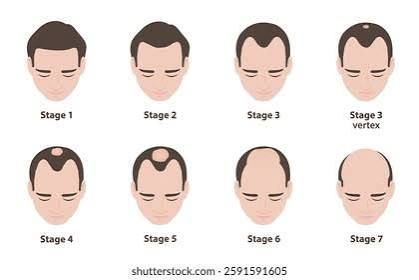
A body hair transplant refers to a specific form of Follicular Unit Extraction (FUE) where donor hair is taken from the body (usually from the beard or chest) instead of the back of the head. It is typically reserved for complex cases where scalp donor hair is limited or depleted. Body hair grafts are very rarely a first-line treatment. It is a specialised solution for patients who require additional grafts to improve density, repair previous surgery, or restore advanced hair loss.
What is a Body Hair Transplant?
A body hair transplant (BHT) is a rare and useful method of hair restoration surgery involving the extraction of hair follicles from areas such as the beard or chest and implanting them into the scalp. While the usual donor area(back and sides of the head) is used for 99% of cases, body hair can be used in complex surgical cases where traditional donor hair is severely limited.
In most instances, body hair is used after a patient has already had two or three previous surgeries and still requires an increase in density. Particularly in the crown and bridge sections of the scalp. Body hair is never used in hairlines. This is because hair from the chest and beard behaves differently from scalp hair. It has different growth cycles, calibre, and texture. For this reason, BHT is usually used to improve density rather than recreate a natural hairline.
Body Hair Transplant vs Scalp Hair Transplant Procedure: The Key Differences
A traditional scalp hair transplant uses donor hair from the back and sides of the head. These areas are genetically resistant to hair loss. Comparatively, a body hair transplant uses non-scalp donor sources. The most common is beard hair. Chest hair may also be used in selected cases.
Key differences between the two methods include:
- Growth cycle duration – body hair grows shorter and has a different growth cycle compared to scalp hair, which can affect the final aesthetic results.
- Extraction time during surgery – the extraction of body hair grafts is more time-consuming and requires a higher degree of skill than traditional scalp FUE.
- Curl pattern – body hair often has a different curl pattern compared to scalp hair. Beard hair may be coarser and slightly wiry. Chest hair can be finer and curlier.
- Graft survival rates – scalp donor hair generally has higher and more predictable survival rates. Body hair graft survival can vary depending on donor source, extraction technique, and placement strategy.
- Overall density potential – Scalp hair provides the highest density potential in hair transplantation. Body hair is usually used to supplement density rather than create it from scratch.
Scalp donor hair remains the gold standard. Body hair is considered a supplementary resource when scalp donor supply is insufficient.
How Does a Body Hair Transplant Procedure Work?
Because body hair behaves differently from scalp hair, surgical planning is more detailed. Donor selection, graft handling, and placement strategy are critical to achieving natural results. So, be sure to choose a surgeon-led clinic who specialise in body hair transplant procedures.
The entire body hair transplant procedure typically lasts 4 to 8 hours, depending on the number of grafts harvested and implanted. All body hair transplants are performed under local anaesthesia, minimising any chance of pain during the procedure. So, how does the procedure work?