

Overview
- The term “unshaven hair transplant” (also known as U FUE for FUE procedures) commonly refers to a hair transplant performed without shaving a person’s recipient area. This is only applicable to patients with a clear and defined area of hair loss (temple recession) and NOT general thinning.
- FUE hair transplant always requires the donor area at the back and sides of the scalp to be shaved to a grade 1, so that follicles can be extracted cleanly without damage. The full FUE procedure is described on our FUE hair transplant page. What this page covers is the variations on FUE that allow patients to keep their existing hair length in some or all areas — the partial-shave (U FUE) and the FUT based fully unshaven approach.
- FUT, or strip surgery, is the only surgical procedure where the donor area hair may not need to be shaved at all during surgery. However, this is only possible is a patient has a clearly defined area of hair loss.
The 2 Types of No Shave Hair Transplants
A hair transplant can be categorised in three ways:
- No Shave Hair Transplant – effectively, a hairline hair transplant using the FUT method. The recipient site and donor site remain unshaven.
- Partial Shave Hair Transplant – this refers to a shaved donor area and an unshaved recipient area. This can be performed on most hairline cases. A partial shave HT would encompass terms like: “UFUE hair transplant” and “unshaven FUE transplant”.
Hair Transplant Without Shaving: What’s the Big Deal?
At Denmark Hair Transplant Clinics, the most common question we’re asked by prospective patients is whether they can have a hair transplant without shaving hair from their head. The supposed “no shave” hair transplant has achieved an almost mythical status among patients, with many clinics even advertising this as a genuine service.
A hair transplant without shaving has an obvious appeal to patients. The prospect of having a hair transplant and wanting to keep your existing hair long is tempting as this means you could hide any sign of surgery and avoid what is commonly referred to as the “ugly duckling” phase. This would mean no awkward conversations at work, no funny looks in the gym or supermarket, and your hair would look relatively normal in the first weeks after surgery.
The reality is that very few hair transplant procedures performed today are truly “no-shave”. Almost all surgeries require the donor area (back and sides) to be shaved. Many surgeries, due to particular hair loss symptoms, require the entire head to be shaven.
So, this leaves two important questions: “what is a no shave hair transplant?” and “is a no-shave hair transplant even possible”? It’s only through understanding these questions that we can begin to shed some light on the notorious unshaven hair transplant.
Is An Unshaven Hair Transplant Possible?
The answer to this question revolves around your definition of the term “unshaven”. Are you referring to the hair on your entire head? Are you talking about your hairline? What about the hair on the back and sides?
FUE always requires donor-area shaving (covered in the Overview above). The variations described on this page are about whether the recipient area can be left unshaven, not the donor.
FUT, by contrast, can be performed without shaving the donor area. This is because a small strip of skin is removed from your donor area using a scalpel, leaving all remaining hair intact. That being said, FUT does pose more risks to patients and has several drawbacks. But more on that later…
However, eligibility for a “fully” or “partial” unshaven procedure is dependent upon the hair loss symptoms a patient is experiencing and the type of surgery they want. If a patient has a clearly defined area of hair loss (e.g. temple recession) then the top of the head may not need to be shaved. Long hair could be pulled back using clips or a hairband, and an unshaven procedure could occur.
If a patient does not have a clearly defined area of hair loss (e.g. hair thinning or crown hair loss), then the recipient area needs to be shaved. For DHI, FUE, and FUT, this would mean the entire scalp would need to be shaved.
In short:
- FUE and DHI can never be fully unshaven . However, if a patient has a small amount of clearly defined hair loss, then a partially shaven surgery could be done.
- FUT could be fully unshaven . This is dependent on the type of hair loss. FUT is typically a good option for women’s hair transplants because of the no-shave approach.
Unshaven Hair Transplants & The Donor Area
In most cases, a hair transplant can never be a fully unshaven procedure. This is due to the hair transplant surgeon wanting to make the surgery as effective as possible while also minimising risks to the patient and surgeon.
Modern Hair Transplants: FUE and DHI
The two most popular hair transplant methods are called Direct Hair Implantation (DHI hair transplants) and Follicular Unit Extraction (FUE hair transplants). These procedures look to extract individual hair follicles from the donor area and implant them into the recipient site.
By extracting hair follicles individually, FUE and DHI methods are minimally invasive and do not leave a patient with a lifelong “strip” scar, as is the case with Follicular Unit Transplantation (FUT). In order to extract hairs individually, one of the trade offs is that these two methods always require the patient to shave the back and sides of their head for surgery.
Before your surgery can begin, the hair on the back and sides of your head is shaved to a grade 1 by a member of the surgical. This needs to occur for the following reasons:
Surgical Efficacy
As part of a hair transplant surgery, thousands of suitable grafts need to be extracted from the donor area for the surgery to be successful. Long hair can easily become damaged by the surgeon’s extraction tool.
If a graft gets damaged by the extraction tool, it cannot be used during surgery. This means extra grafts will need to be taken on top of the original number, increasing the risk of over-extraction in the donor area.
From a pragmatic perspective, it makes much more sense to shave a patient’s donor area to minimise any risk of damaging grafts and causing over-extraction. Furthermore, shaving the donor area speeds up this process while limiting surgical risk.
Safety Reasons
Shaving the donor area during FUE and DHI has a series of implications when it comes to safety, as well. Long hair not only increases the risk of damaging grafts but it can also damage surgical equipment as well.
Long hair can easily get caught in the extraction tool during surgery. If hair gets tangled in the tool, the machine can break. This would not only be expensive but potentially dangerous to the patient and surgeon.
Traditional Hair Transplants: FUT
FUT (Follicular Unit Transplantation) is the only hair transplant technique that can be performed without shaving the donor area at all, because grafts are taken as a strip of skin and follicles are dissected under microscope. The trade-off is a single linear scar across the donor area which patients must keep concealed by hair length thereafter. FUT is therefore the typical choice when patients require a fully no-shave procedure for personal or professional reasons and have a clearly defined area of recipient loss.
A Denmark Hair Transplant Clinics Case Study: Unshaven FUE Hair Transplant
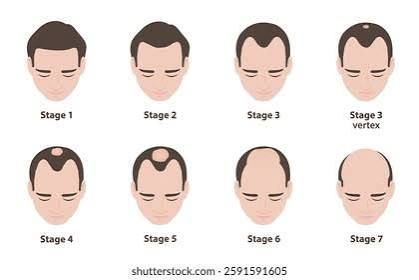
In the video below, you will see a patient who had a hairline hair transplant. He came to Denmark Hair Transplant Clinics requiring a hair transplant to reverse signs of his receding hairline ( Norwood Scale 3). This was a classic unshaven FUE hair transplant: